Why a House Drawing and Uncle's Anniversary Make Sense Together
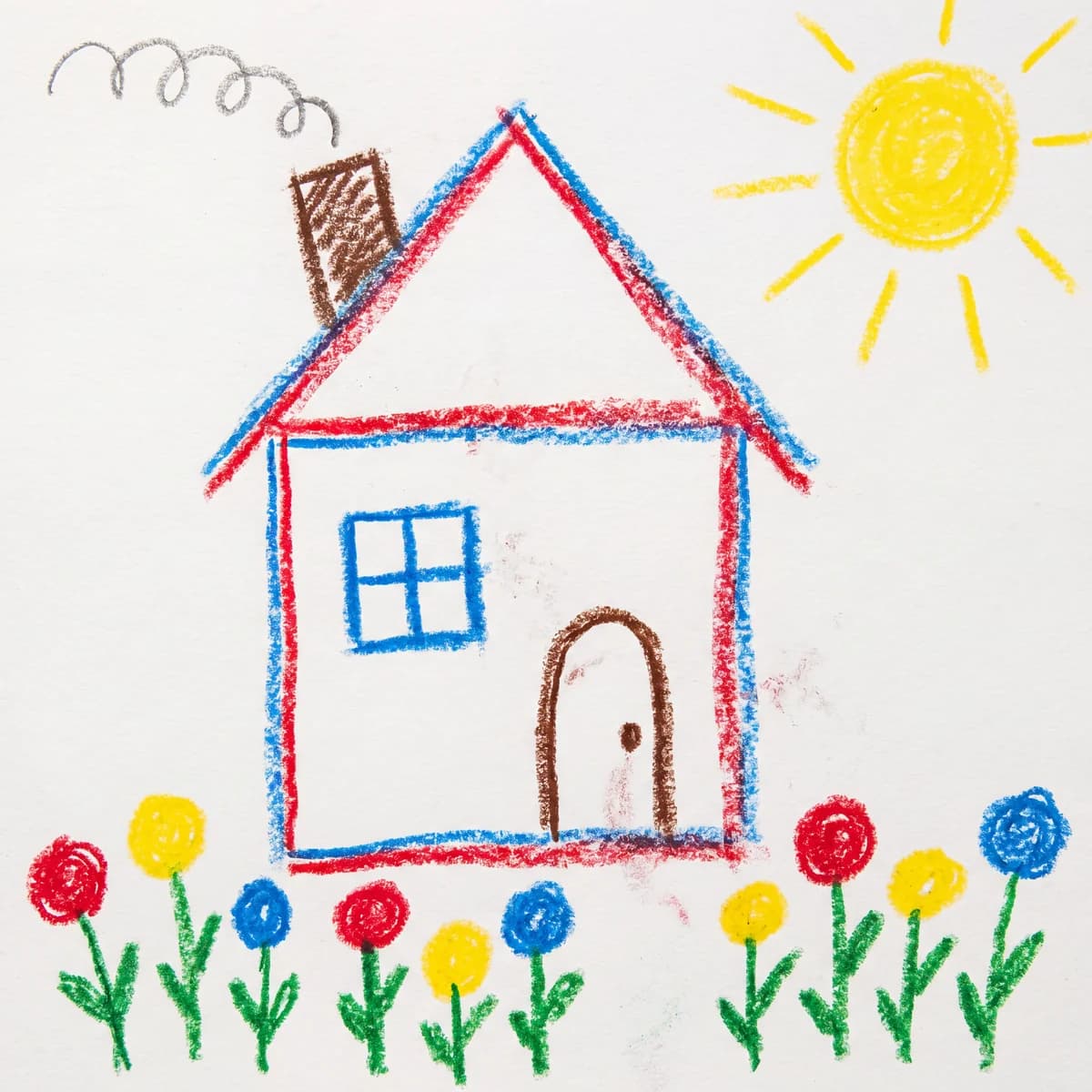
There's a specific kind of uncle who earns a crayon house drawing. Maybe he's the one who showed up with a toolbox when you moved in, or the one who sat on the floor with your kid and colored for an hour while the adults talked. Either way, a house means something to him in context, and your kid picked up on that without being told to.
Anniversaries are tricky gifts. You want something personal, not another bottle of something or a gift card he'll forget to use. A light that glows with a drawing your child made, a drawing of a house no less, lands differently than anything you could order off a generic gift site.
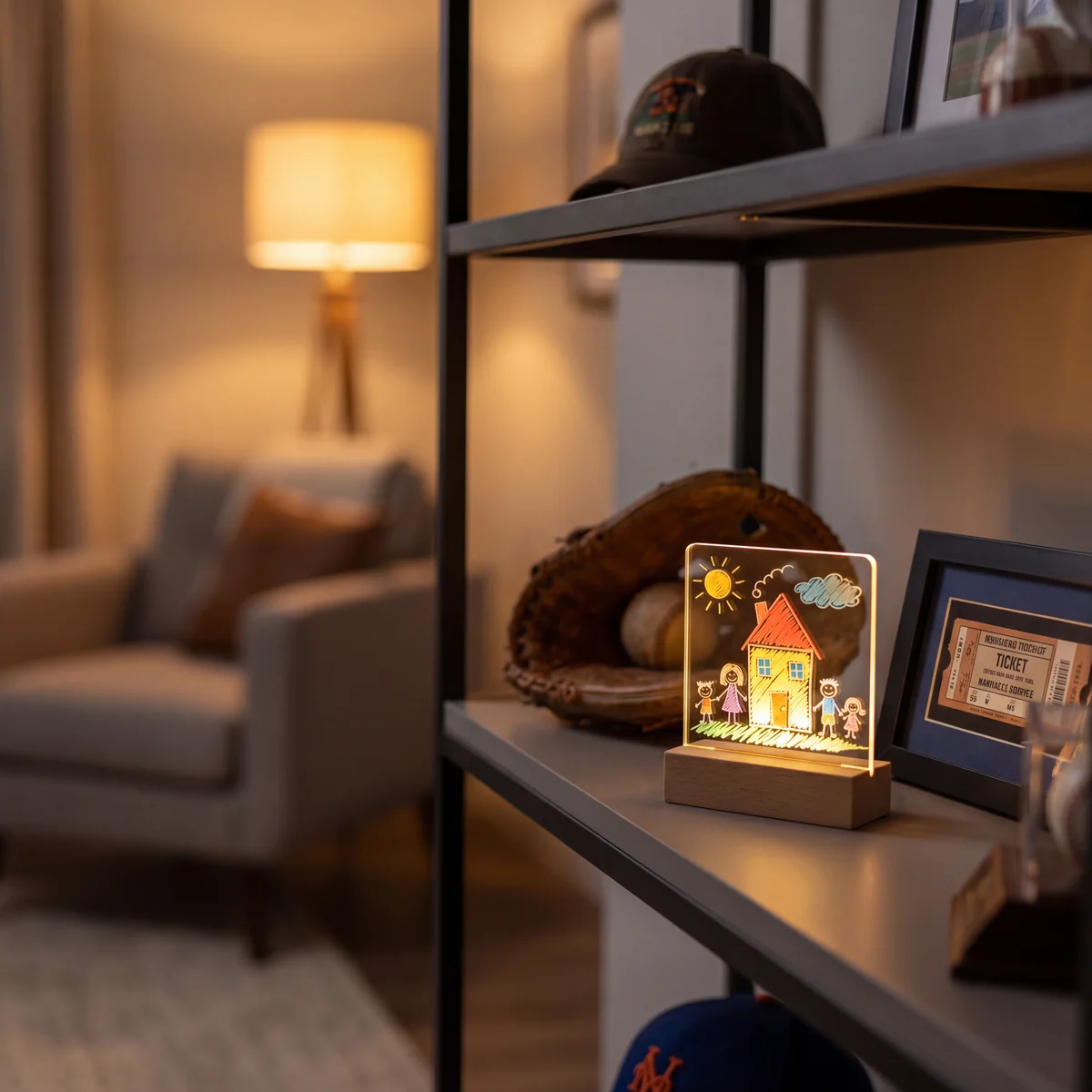
This isn't about being sentimental for the sake of it. It's about giving Uncle something he'll actually put on a shelf and leave there. The crayon house drawing connects to something real, and the light makes it visible every time he walks past it.
A Glowing Keepsake Over a Generic Anniversary Present
Generic anniversary gifts for an uncle tend to fall into a few predictable categories: novelty items that get used once, consumables that disappear, or framed photos that join a pile of other framed photos. None of those do much with the actual relationship.
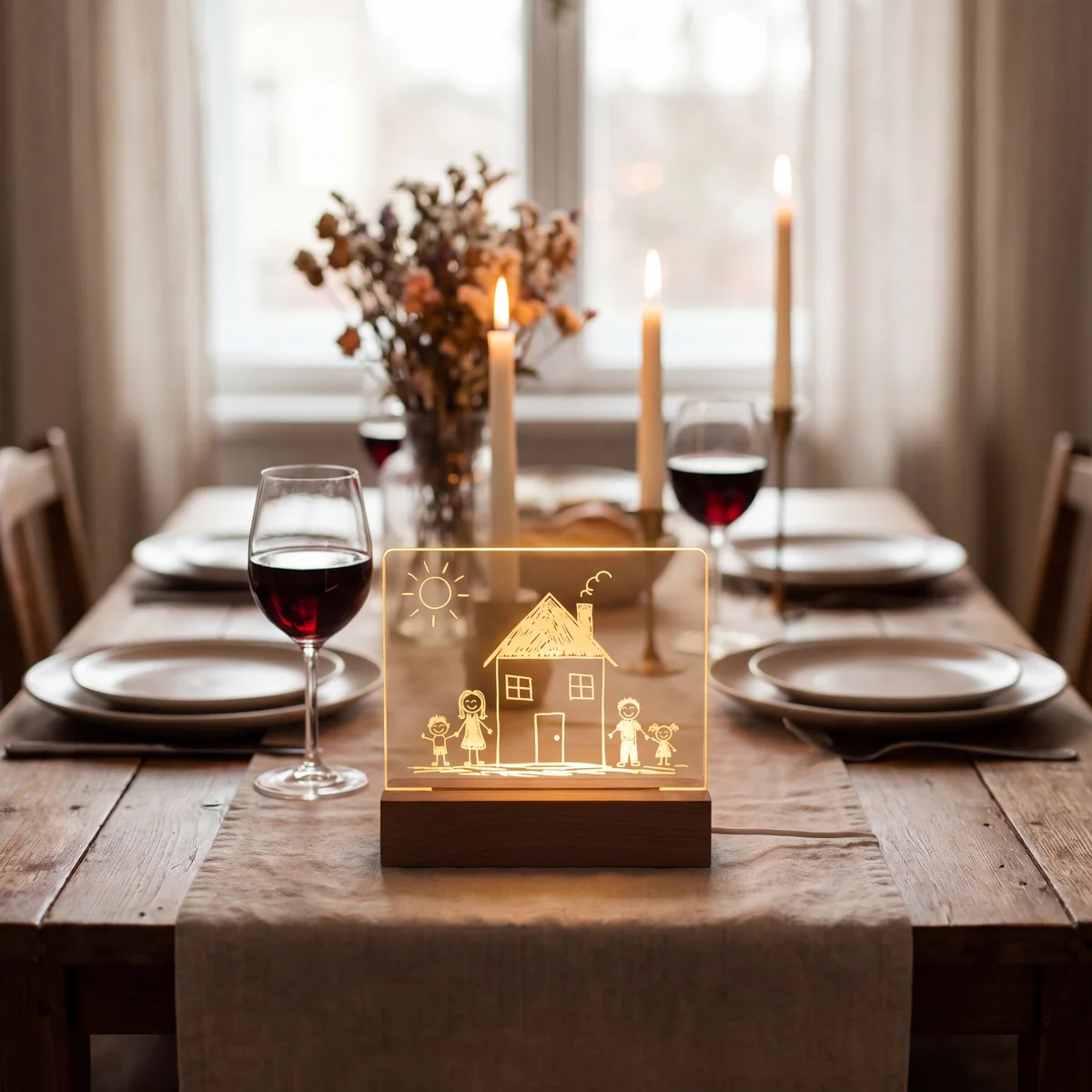
What this night light does differently is that it holds the drawing exactly as your child made it. The wobbly roof line, the chimney that's a little too tall, the smoke that looks more like a scribble. That specificity is the whole point. It's not a stock image of a house. It's the house your kid drew, printed with UV ink directly onto clear acrylic so the detail and color stay true.
The wooden LED base gives off a warm, low glow that makes the print look like it's lit from within. It plugs in via USB, so Uncle can use it on a desk, a nightstand, or a bookshelf without any fuss. It's functional enough to justify keeping it out, and personal enough that he won't want to put it away.
Getting the Most Out of a Crayon House Drawing
Crayon drawings work really well for this product, and house drawings in particular tend to have the kind of bold outlines and saturated color that the UV printing process captures cleanly. That said, a few small things help us get you the best result.
Flat, even lighting when you photograph or scan the drawing makes a noticeable difference. Natural light near a window, or a decent phone camera directly overhead with no shadows across the paper, is usually enough. You don't need a scanner, though if you have access to one, a 300 DPI scan gives us the sharpest file to work from.
If the drawing is on lined paper or has visible fold creases, don't worry too much. Our team in San Leandro, California reviews every file before it goes to print, and we can make minor adjustments to reduce background distractions without changing the drawing itself. If we see something that might affect the final piece, we'll reach out before we run it.