Why a House Drawing Hits Different When It Comes From a Kid
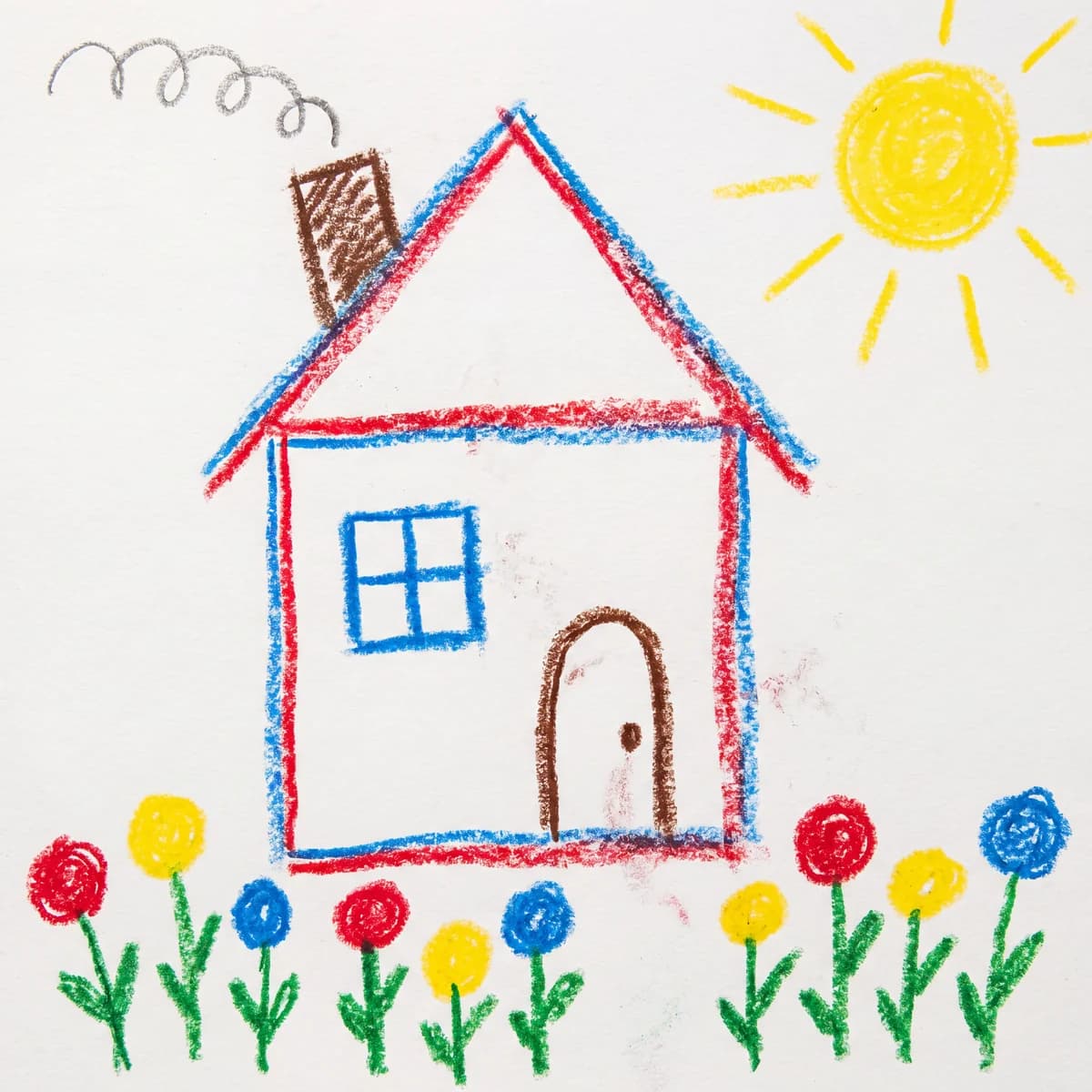
There is something specific about the house drawing. Every kid draws one eventually, usually unprompted. Four walls, a triangle roof, maybe a chimney with a curl of smoke, a sun in the corner, a door that is slightly too tall or too short. It looks simple, but it is one of the first ways a child maps out the idea of home and family.
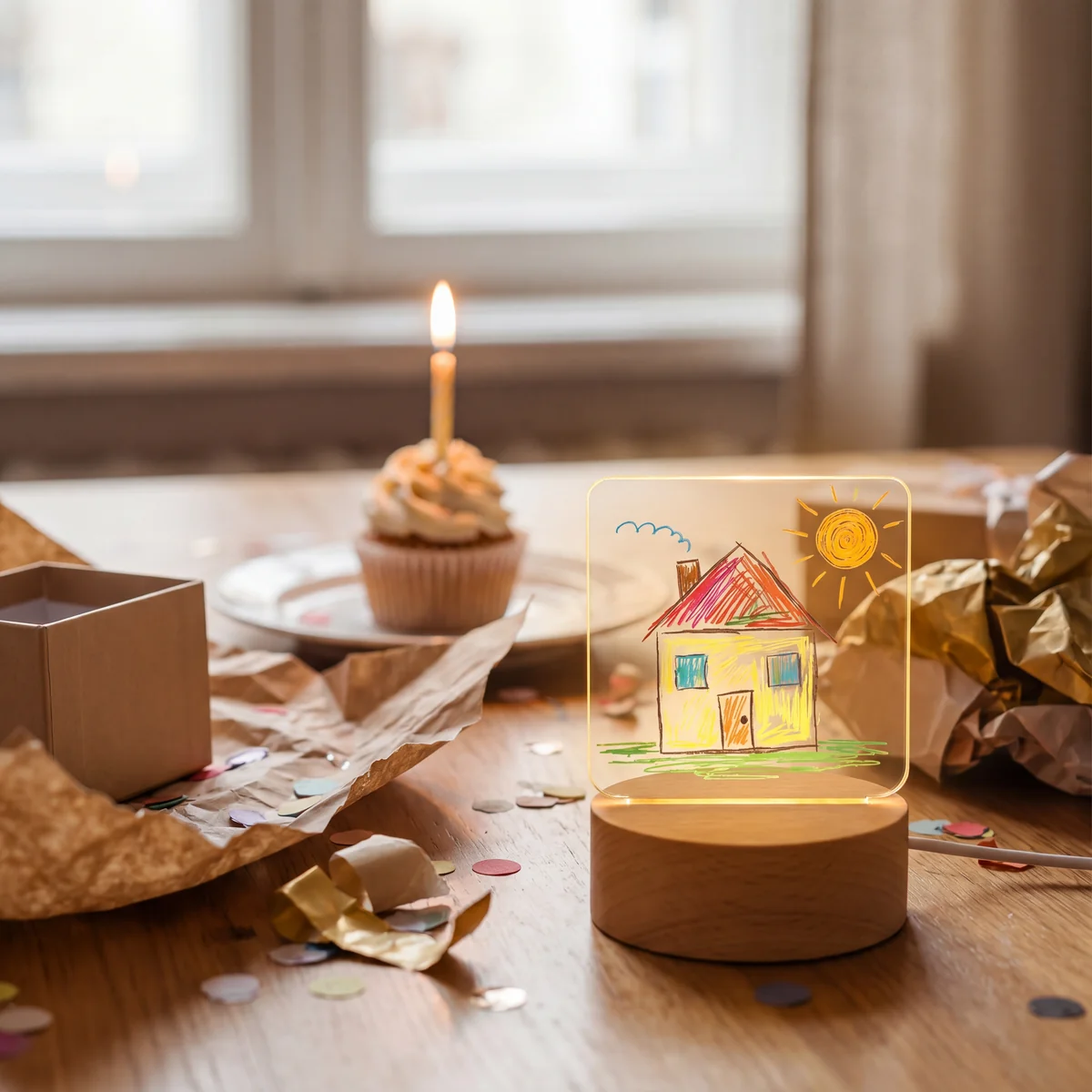
When that drawing ends up in your uncle's hands as a birthday gift, it carries a meaning a store-bought item cannot replicate. He knows whose hand made those lines. He knows how old the kid was. That context is baked in before he even plugs the light in.
We work with a lot of house drawings at our studio. They come in on white printer paper, on construction paper, on the back of grocery lists. They all have that same unmistakable quality. We print every single one as-drawn, crayon marks and all, because the imperfection is the whole point.
What Makes This a Better Birthday Gift Than the Standard Options
Most people default to a gift card, a bottle of something, or a gadget he probably already owns. Those are fine. They are also forgettable within a week. This is not a knock on anyone who has gone that route. It is just an honest observation about how birthday gifts tend to land.
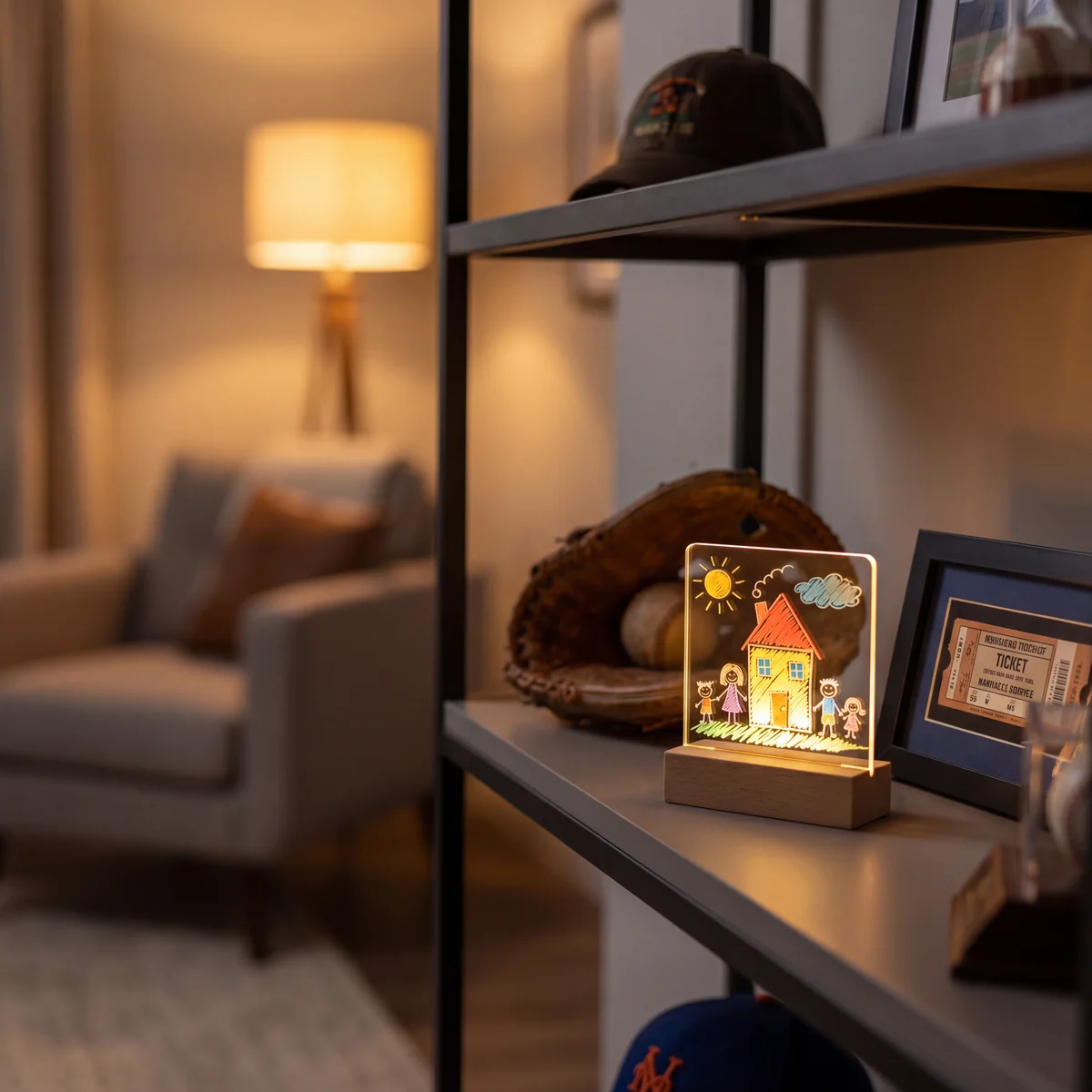
This night light is different because it requires almost no effort from you beyond uploading a photo of the drawing, and the result looks like something that took a lot of thought. It also involves your kid in a real way, which tends to matter to uncles more than people expect. The fact that a child made the artwork means the gift comes with a story attached.
It sits on a desk, a nightstand, or a shelf. It glows softly when he wants it to. When someone asks about it, the answer is a good one. That is what you want a birthday gift to do, and a generic present rarely pulls it off.
Tips for Getting the Best Result From a Crayon House Drawing
Crayon drawings photograph well under good lighting, but there are a few things worth knowing before you upload. First, use natural light or a bright overhead light and avoid flash directly on the paper. Flash tends to wash out the lighter crayon colors and can create a glare that flattens the whole image.
If the drawing is on lined paper, do not worry about it. Our team sees lined paper regularly. We crop and adjust so the lines are minimized in the final print, though faint traces sometimes remain depending on the scan quality. If that matters to you, mention it in the order notes and we will take a closer look before printing.
Flattening a crumpled drawing before you photograph it makes a real difference. A few minutes under a heavy book is usually enough. Also try to capture the full drawing with a little white border around the edges rather than cropping tightly in your camera. We can always trim during production, but we cannot recover what was not in the original photo.