Why a Self Portrait from Your Kid Hits Different Than Anything You Can Buy
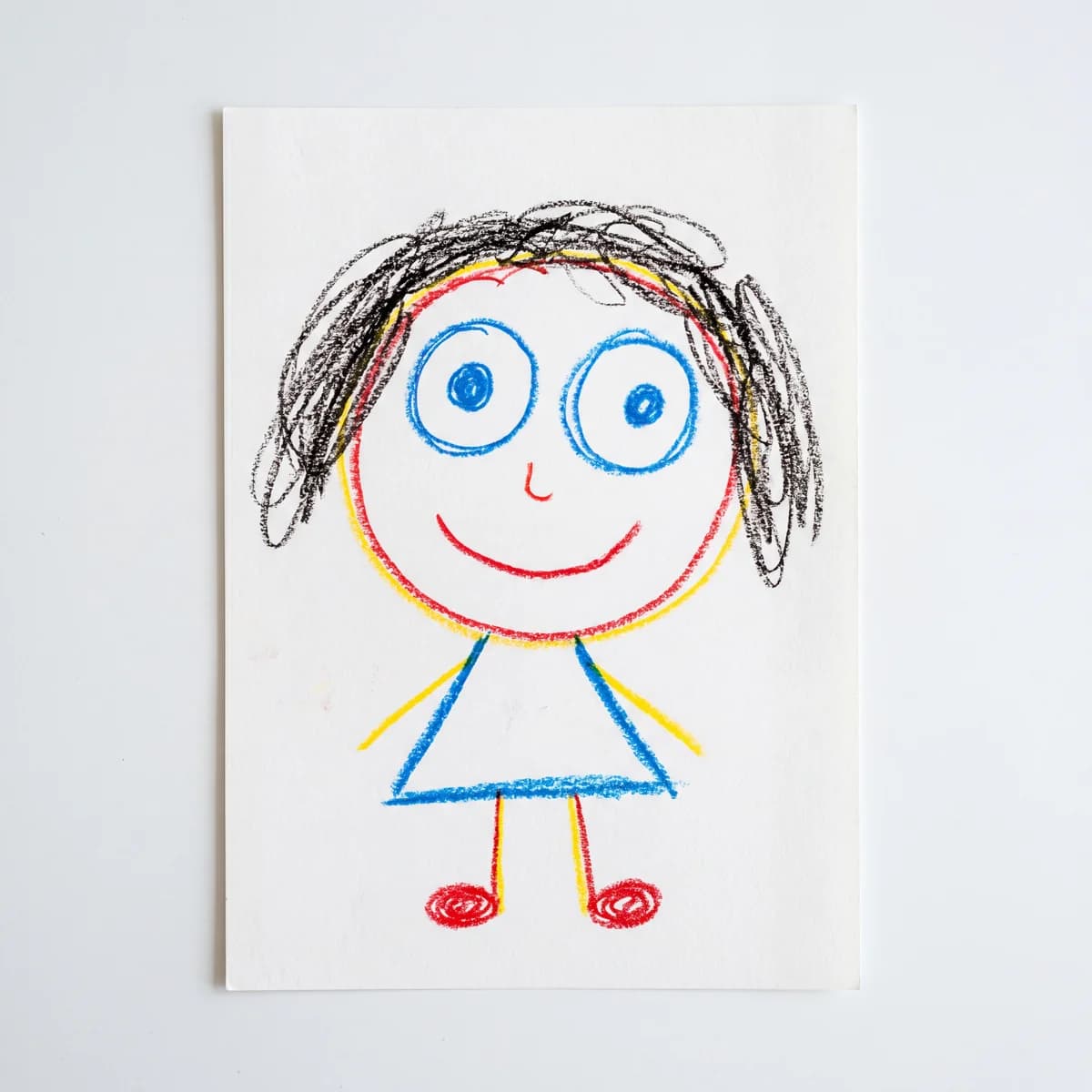
There's a particular kind of drawing that every parent collects, usually on construction paper or the back of a grocery list: the self portrait. The oversized head, the stick arms, the crayon smile that somehow captures exactly who the kid thinks they are at this moment in their life. It's a document. A small, slightly chaotic document.
When you're shopping for a Mother's Day gift for a close friend, you want something that reflects the relationship, not just the occasion. A self portrait from your child says something real: that your friend matters enough to be trusted with this. It's the kid saying, in their own scribbled way, "you're part of our family too."
Most gifts for this occasion are interchangeable. A custom night light built from a child's actual drawing is not. It's specific to one kid, one moment, one friendship. That's the whole point.
Why This Night Light Works Better Than a Framed Print or a Mug
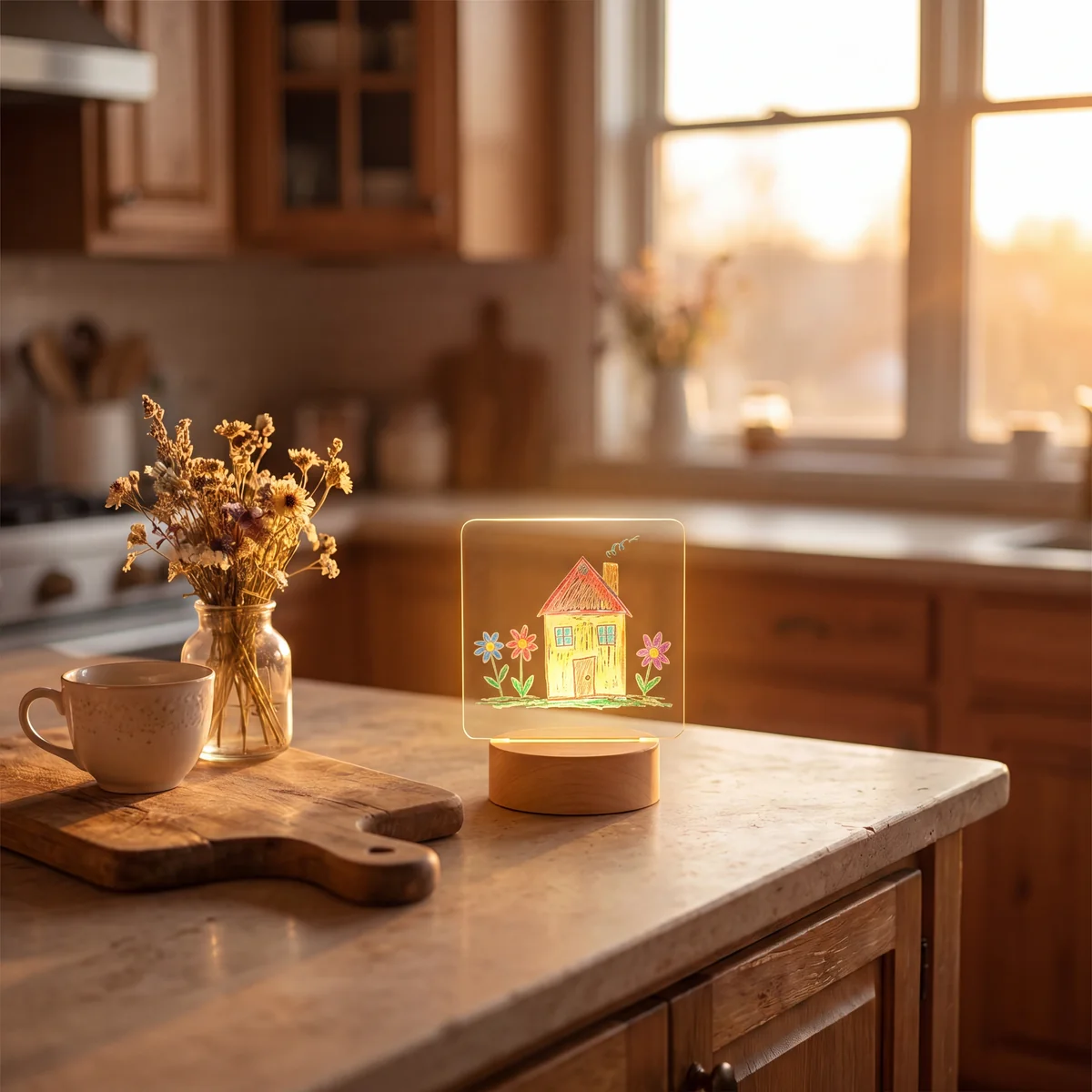
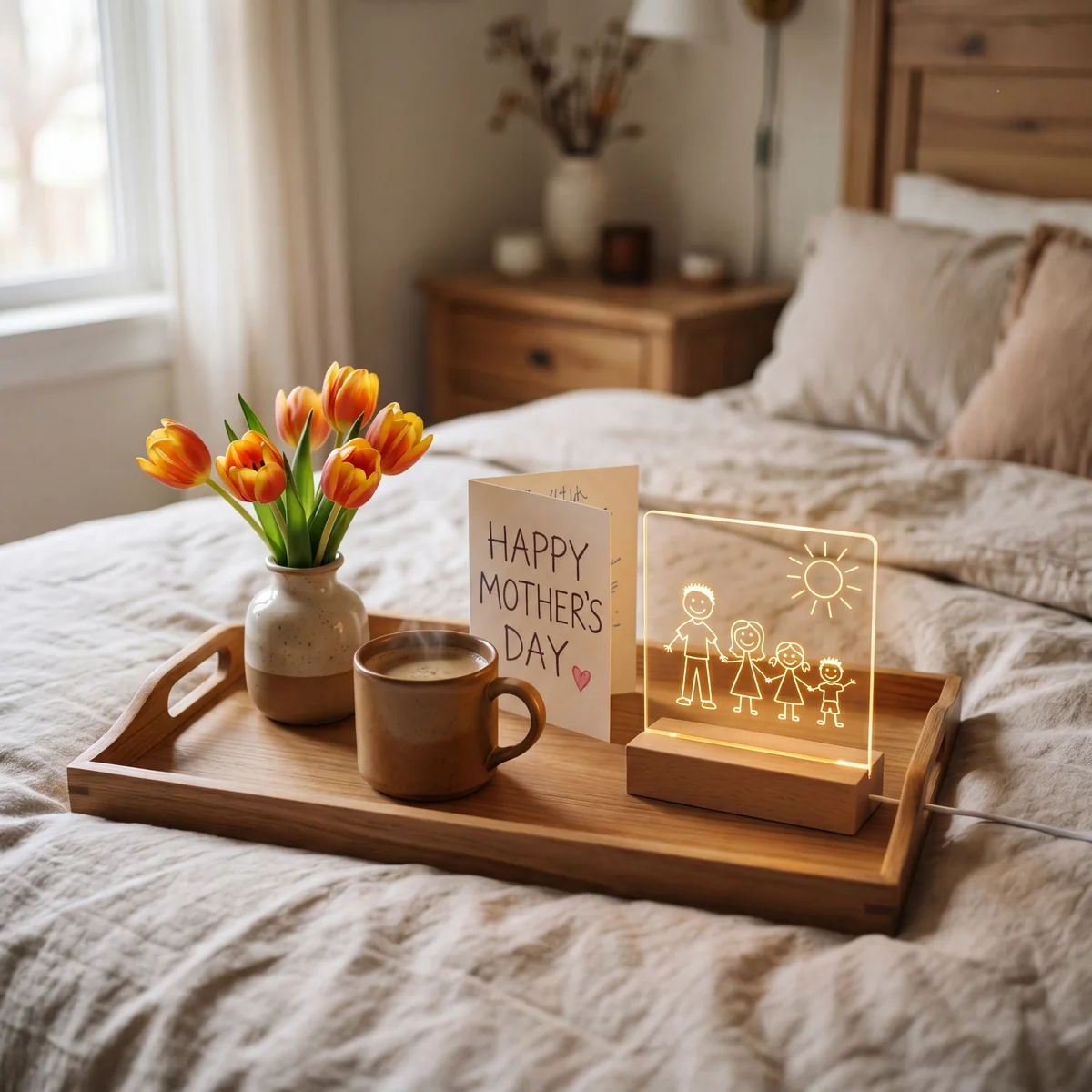
Framed prints are nice, but they require wall space and a decision about where they go. Mugs are fine, but they circulate through the cabinet and don't really communicate that someone thought hard about this. A glowing acrylic night light sits on a nightstand or a shelf and does something a print or a mug can't: it changes with the light in the room.
During the day it reads as a clean, crisp print on clear acrylic. At night, or in a dim room, the LED base lights it from below and the drawing glows. The warm wood base keeps it from feeling like a gadget. It looks like something a person chose to display, not something they felt obligated to keep.
For a friend who already has a full house and doesn't need more stuff, this is the kind of object that earns its space. It's small enough to fit anywhere and specific enough that she's not going to mistake it for a generic purchase.
Getting the Best Self Portrait for This Kind of Print
Self portraits come in a lot of formats. Some kids draw themselves with careful detail. Some go full abstract. Both work, but there are a few practical things that help us make a cleaner print.
Flat, even lighting when you photograph the drawing makes a real difference. Avoid shadows across the page, which can show up as gray patches in the final print. If the drawing is on lined paper, that's totally fine, but if you can photograph it on a plain surface with the paper flat, the lines won't compete with the artwork. Bright natural light near a window, no flash, usually does it.
Color drawings tend to pop more on the lit acrylic than pencil-only pieces, but we've printed both and pencil drawings have their own quiet quality on the light. If your kid included their name or wrote a little message alongside the portrait, leave it in. Those details tend to be the part the recipient notices first.