Why a Self Portrait Changes Everything About This Gift
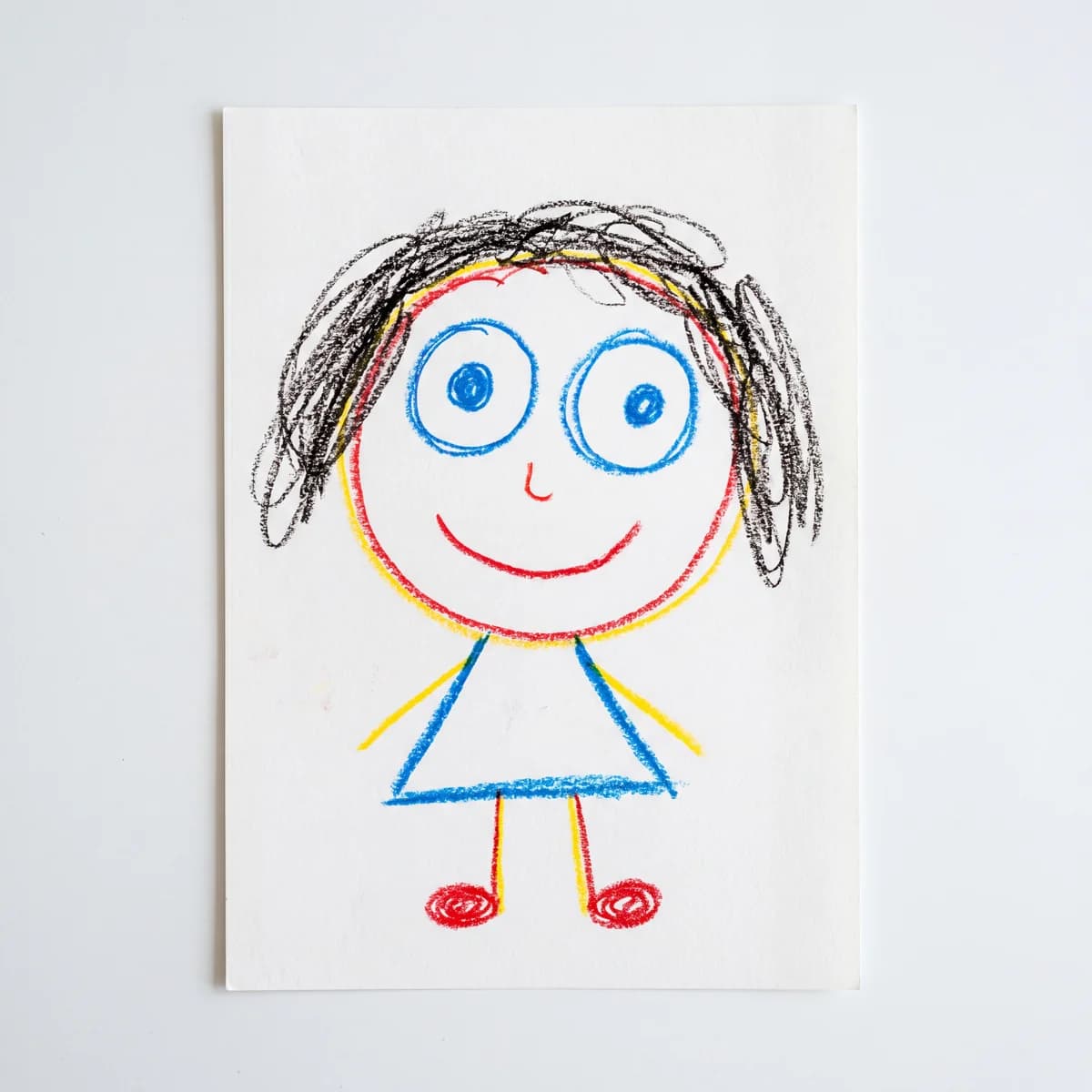
Most kids, at some point, draw themselves. It might be a circle head with five spiky hairs and a smile that takes up half the face. It might be surprisingly detailed, with careful attention to the color of their own shirt. Either way, that drawing is a specific, unrepeatable artifact of who your child was at this exact age.
For Mom, a self portrait from her kid carries a weight that a store-bought necklace or a candle simply cannot. It says: here is how my child sees themselves, and I wanted you to have it. That's not a sentiment you can manufacture or order from a catalog.
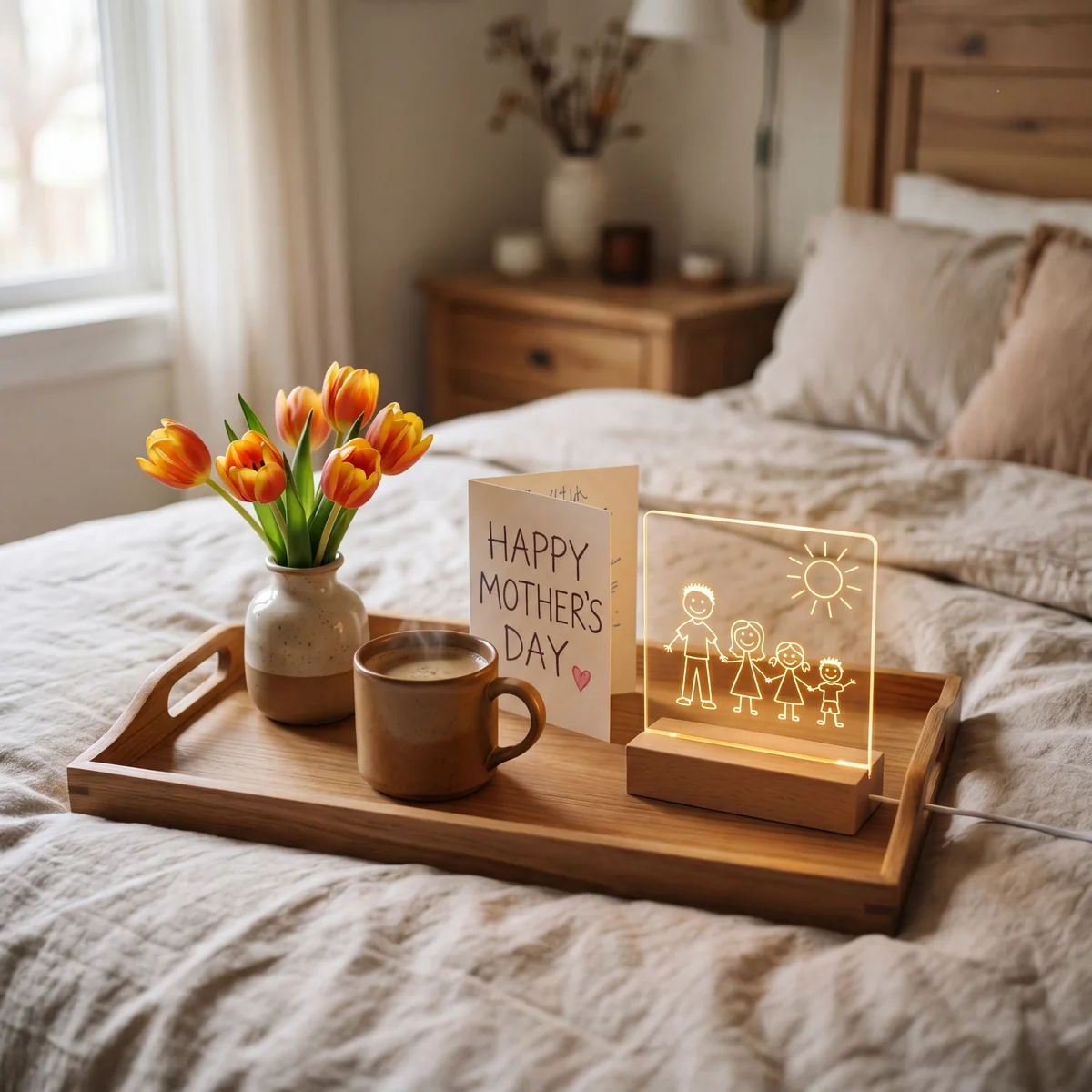
When that drawing glows softly from a wooden base on her nightstand or desk, it doesn't just sit there. It does something quiet and consistent every evening. That's the part we find people don't fully anticipate until they see it in person.
What Makes This Different From a Framed Print or a Mug
Framed prints are fine. Mugs are fine. But both have a ceiling on how much presence they carry in a room. A framed drawing on the wall competes with everything else on the wall. A mug goes into a cabinet rotation.
This night light occupies its own category because it's functional and personal at the same time. It plugs into a USB port, it produces a soft warm glow, and the subject matter is a child's self portrait specifically rendered for the person who loves that child most. That combination is hard to replicate with anything else.
We also hear from customers that the wooden base matters more than they expected. It keeps the piece feeling warm rather than tech-forward. It's not a gadget. It reads as an object someone thought about, which is the whole point for a Mother's Day gift.
Tips for Getting the Most Out of a Self Portrait Drawing
Self portraits vary wildly, and that's genuinely fine. Here's what actually helps us produce a clean result.
First, lighting when you photograph the drawing makes a significant difference. Natural light, no flash, held flat against a neutral background gives us the most to work with. Shadows across the paper from being held at an angle can show up in the final print in ways that are hard to reverse.
Second, if the drawing is on lined paper, don't worry about the lines. We can work around them in most cases, and the UV print process tends to pull the illustration forward visually. That said, plain white paper gives us the cleanest result if your kid is willing to redraw on a blank sheet.
Third, bolder lines and stronger colors tend to translate better to the acrylic than very light pencil sketches. Markers, crayons, and colored pencils all work well. If the drawing is very light, just let us know when you upload and we'll do what we can.