Why a Self Portrait for Aunt Hits Differently on Mother's Day
Aunts occupy a particular spot in a family. They show up to the school play, they remember the small things, and they love that kid with a kind of enthusiasm that doesn't come with the daily stress of parenting. Mother's Day tends to overlook them entirely, which is a shame.
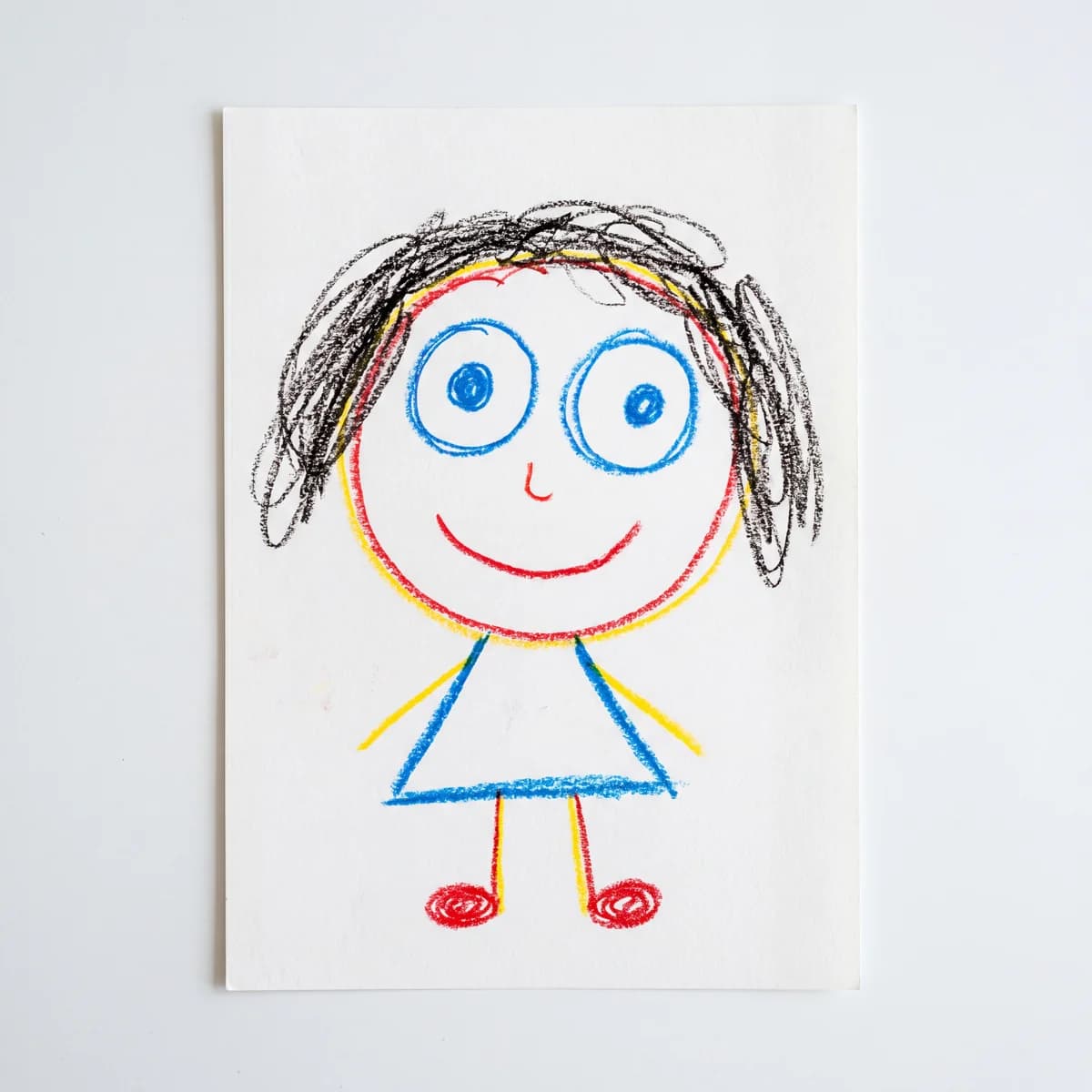
A self portrait changes that. When a child draws themselves, they're not just making art. They're making a record of how they see the world right now, at this exact age, with this hair and these shoes and whatever expression they decided to put on that little face. That drawing is specific to this moment.
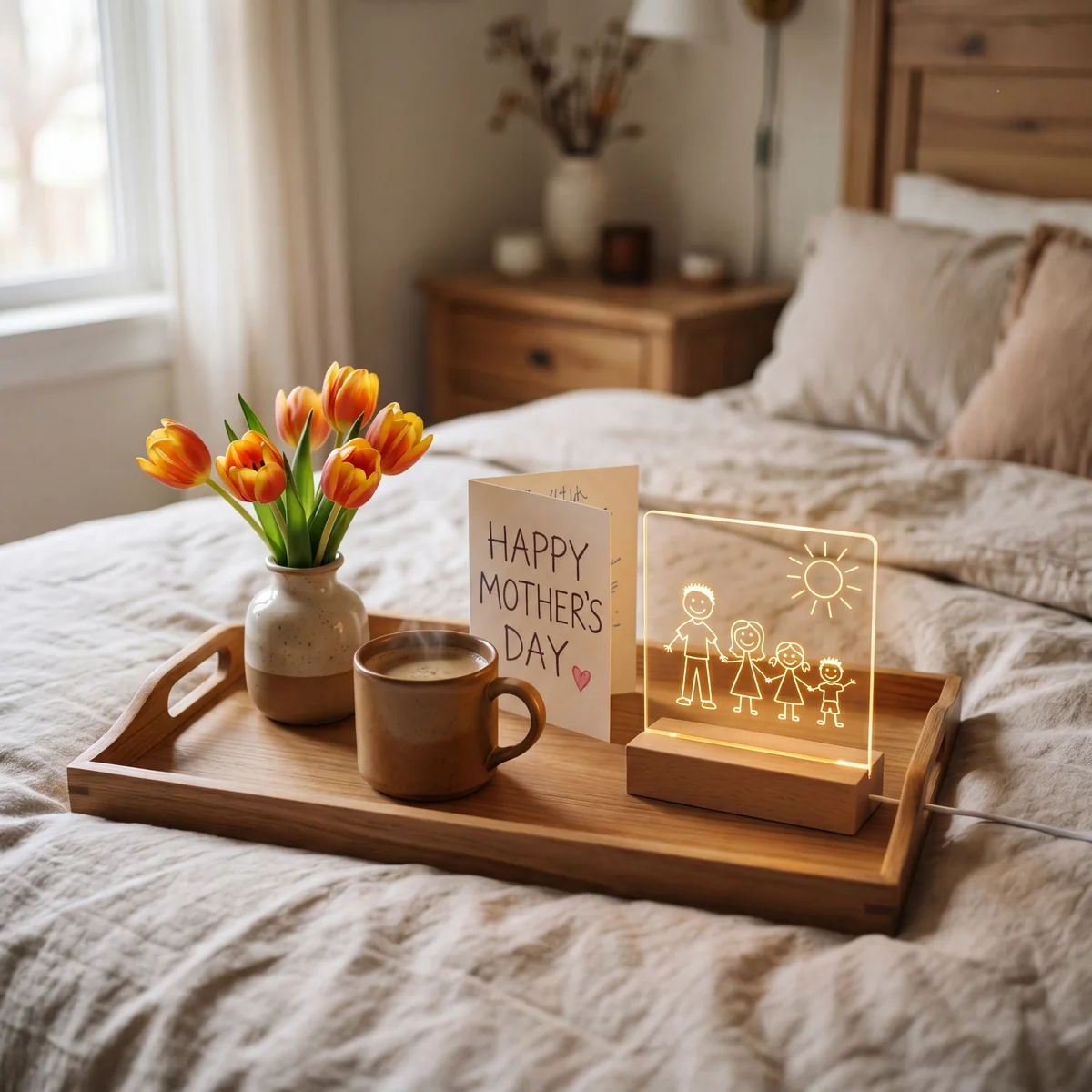
Your aunt gets a lot of generic gifts. A glowing plaque of her niece or nephew's self portrait is not one of those. It's the kind of thing she puts somewhere visible because she wants to, not because she feels obligated. That's what we're going for.
Why This Beats a Generic Mother's Day Gift for an Aunt
Candles are fine. A restaurant gift card is practical. Neither of them says anything about your kid specifically, or about the relationship between your aunt and your child. They say you remembered the occasion, which is a low bar.
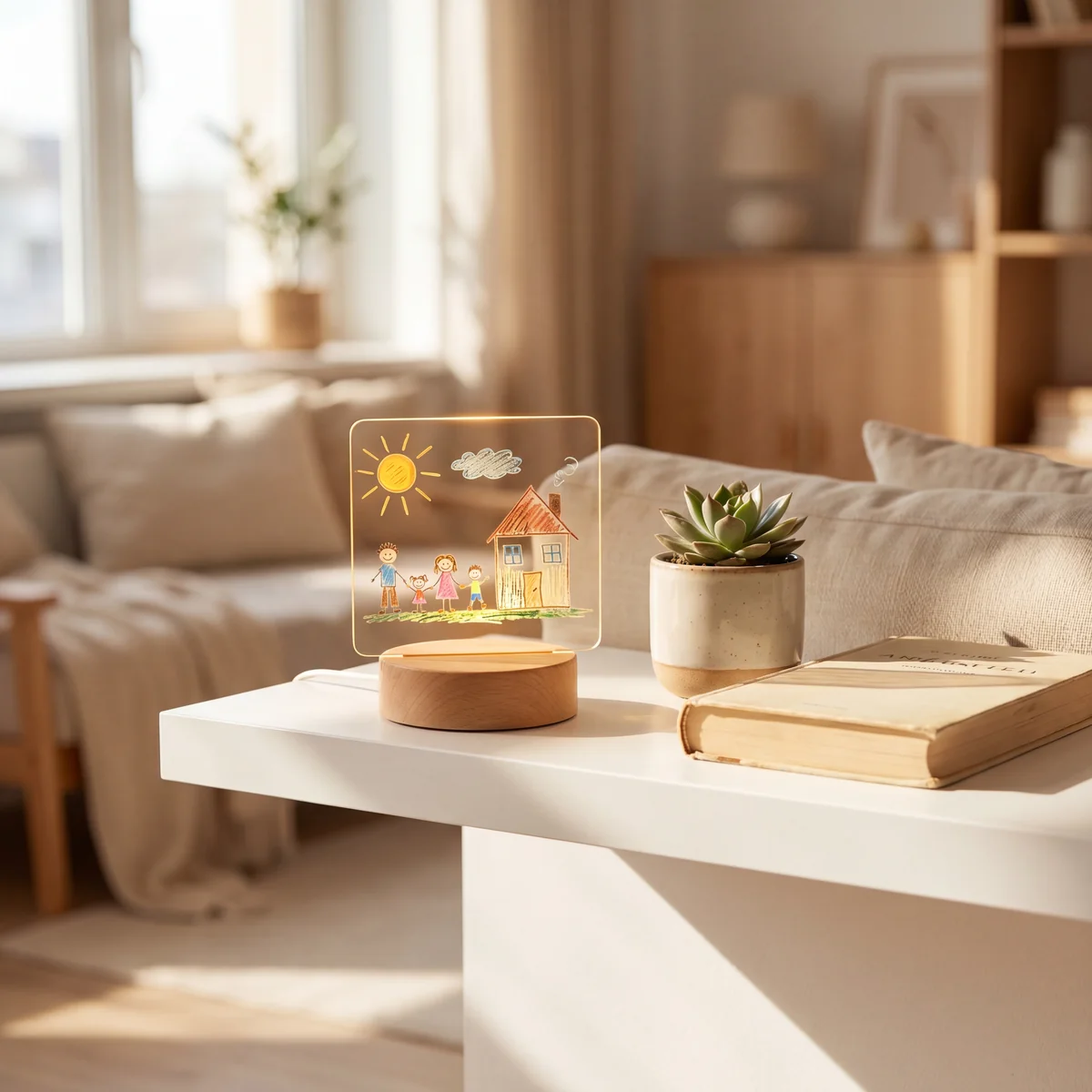
This night light says something more precise. It says your kid sat down and drew themselves, you thought of your aunt, and someone in San Leandro, California spent real time UV-printing that drawing onto optical-grade acrylic so it would look good lit up in her bedroom or on her office desk.
The wooden LED base glows warm, not blue. It doesn't pulse or change colors. It just quietly illuminates the drawing in a way that looks intentional rather than novelty-store cheap. Your aunt will notice the difference. Most people who receive one keep it plugged in long past the occasion it came from.
Getting the Self Portrait Ready to Send Us
Self portraits from kids come in every form imaginable. Crayon on copy paper, marker on construction paper, pencil on the back of a homework sheet, watercolor on whatever was nearby. Almost all of them work well for this process.
A few things that genuinely help: photograph the drawing in natural daylight rather than under a yellow bulb, keep the phone parallel to the paper so you're not shooting at an angle, and make sure the whole drawing fits in the frame with a little margin around it. That's really it.
If the drawing is on lined paper, that's fine. The lines tend to recede once the image is UV-printed and backlit. If the portrait is very light pencil on white paper, it may need a quick levels adjustment on our end, and we'll reach out if that's the case before printing. Darker, higher-contrast drawings tend to translate the most vividly, but we've worked with faint little sketches that turned out beautifully once lit.