Why a Name Drawing Hits Differently Than Any Other Kid Art
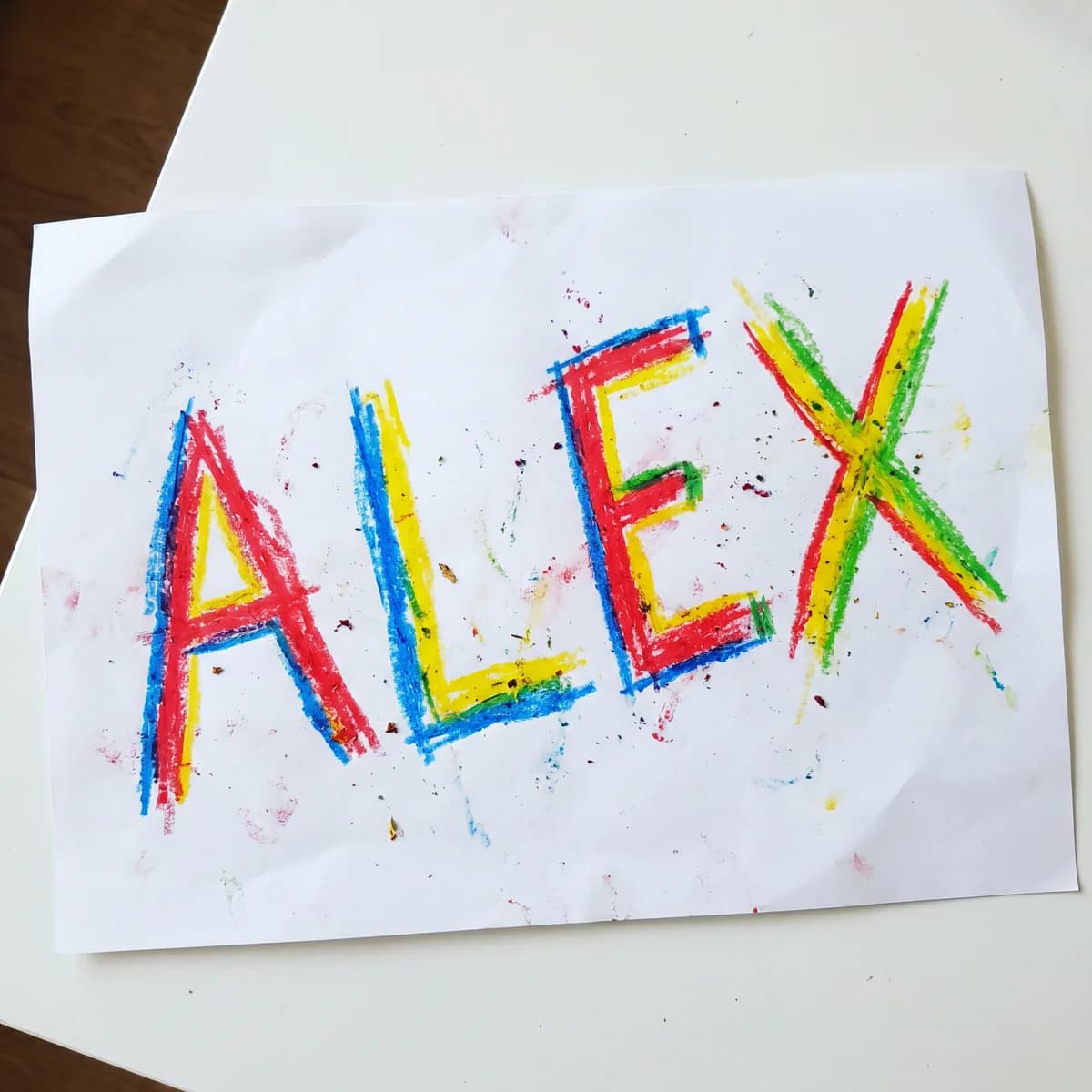
There's something about a child writing their own name, or a parent's name, that carries a specific kind of weight. It's usually one of the first things they learn to do on paper. The letters are uneven, the spacing is a little off, and that's exactly what makes it worth keeping.
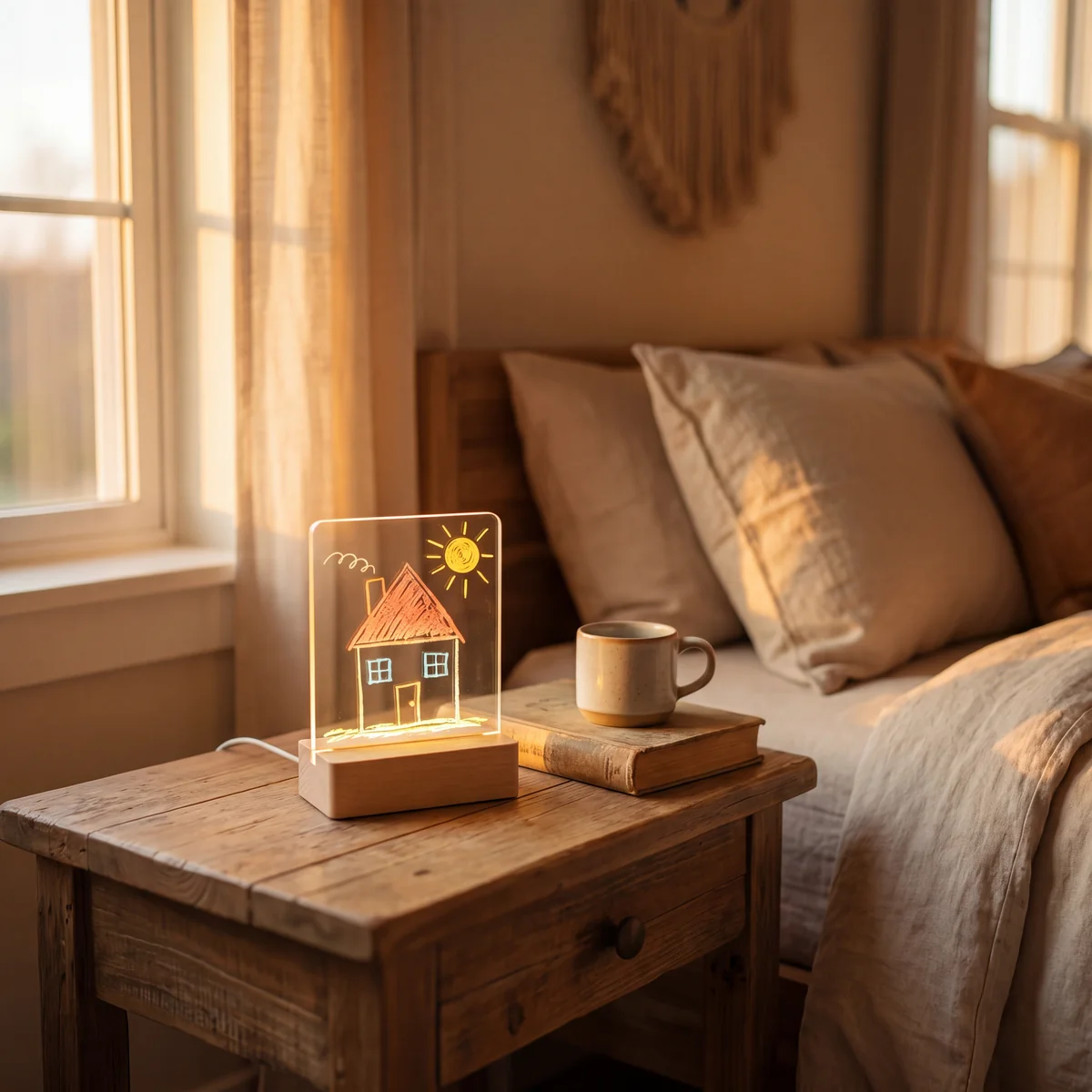
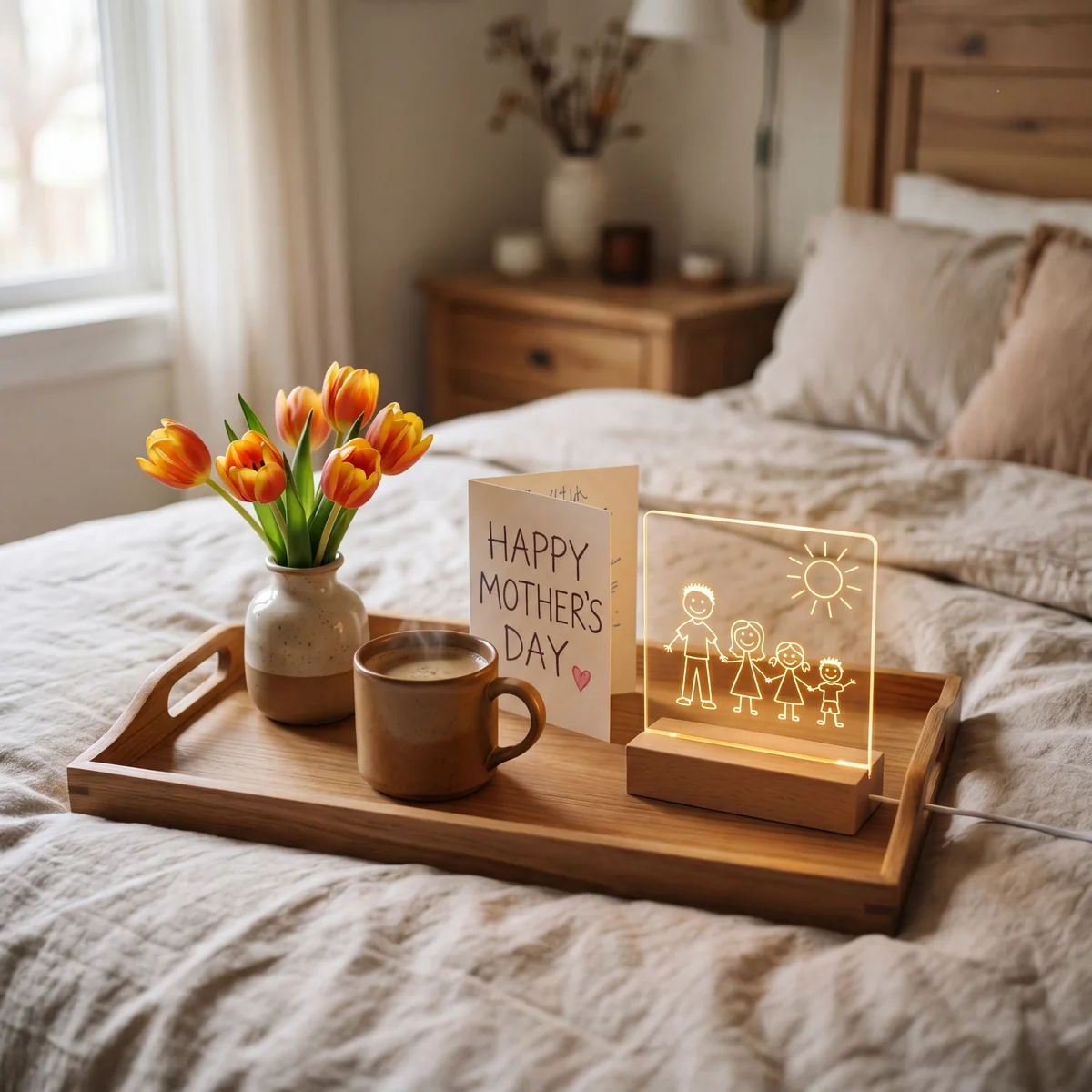
Most Mother's Day gifts don't have that. A bouquet is gone in a week. A candle gets burned. A mug gets shoved to the back of the cabinet. But a piece of your kid's actual handwriting, preserved and lit up on a shelf, sticks around in a way those things don't.
When the theme is the name your kid wrote, whether it's your child's own name, the word 'Mom', or a whole little message they scratched out in crayon, the result is personal in a way that no product off a shelf can replicate. We just make sure it glows.
What Makes This Better Than the Usual Mother's Day Gift
We're not going to oversell this. It's a light. But it's a light made from something real, and that matters more than most people expect until they're actually holding it.
The difference between this and a generic personalized gift is that we're not filling a template with a name someone typed into a form. We're printing the actual drawing your child made, exactly as they made it. Every shaky letter, every pencil smudge, every spot where they pressed too hard, it all shows up in the UV print on the acrylic panel.
For Mother's Day specifically, that distinction is worth thinking about. Mom already knows her kid loves her. What she doesn't have is a physical object that proves her kid, at this exact age, sat down and wrote something for her. That's what this is. It's a timestamp as much as it is a gift.
Tips for Getting the Best Result from a Name Drawing
Name drawings come in a lot of forms. Some kids write big bubble letters on blank white paper. Some write tiny in a corner of a lined notebook page. Some mix upper and lowercase without thinking about it, and some throw in a drawing next to the letters. All of those work, and some of them work really well.
A few things that help us do a better job with your upload: plain white or light-colored paper gives us the cleanest contrast to work with. Pencil drawings are totally fine, though darker lines tend to reproduce more crisply. If the drawing is on lined paper, we can usually work around the lines, but it helps to let us know in the order notes so we can handle it carefully.
Natural light or a flatly-lit photo tends to give us more to work with than a flash photo taken at an angle. If the drawing is crinkled or folded, just flatten it as best you can before scanning or photographing it. If you're unsure whether your image will work, upload it anyway and our team in San Leandro, California will review it and reach out if there's an issue.