Why a Self Portrait for Grandma Hits Different Than a School Photo
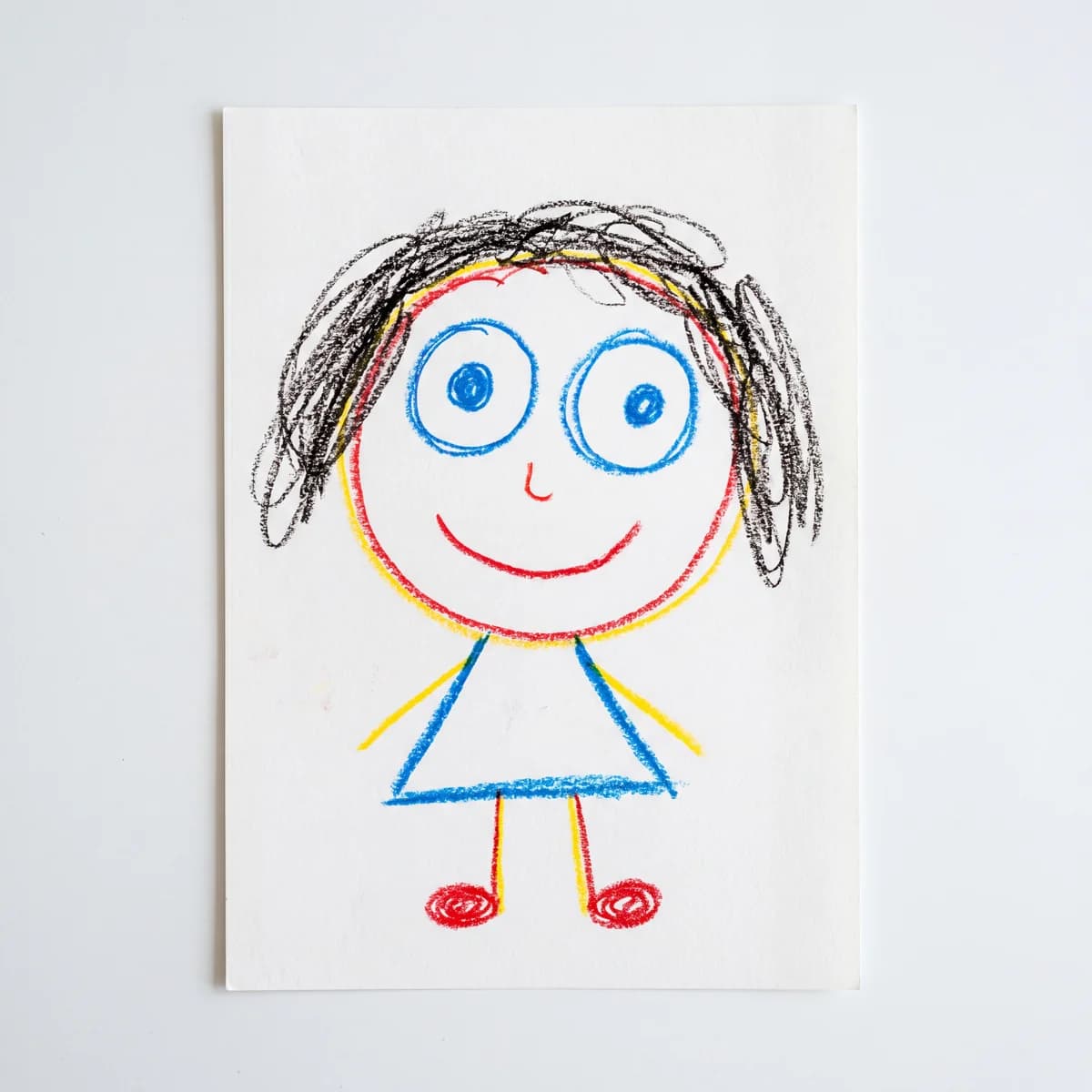
A school photo is professionally lit and carefully posed. It's a fine record of a kid at a particular age, but it doesn't tell you much about who that kid thinks they are. A self portrait does. The lopsided smile, the crayon hair that may or may not match reality, the decision to draw themselves wearing a superhero cape on a Tuesday — that's personality on paper.
Grandma already has the school photos on the fridge. What she probably doesn't have is the version of your child that only exists in your child's own imagination. That's the version that lives in a self portrait, and that's the version worth preserving in something a little more permanent than a sheet of construction paper on the kitchen counter.
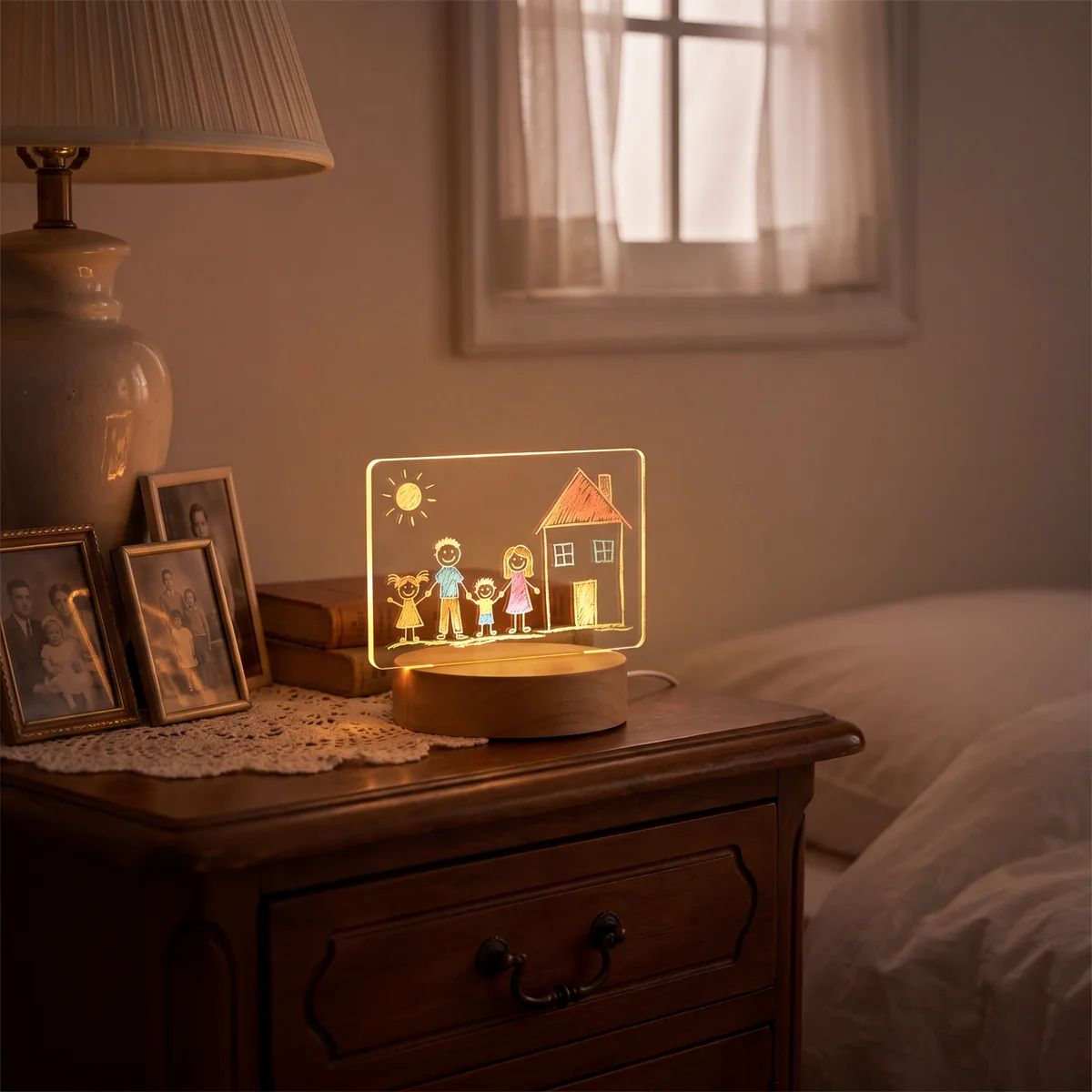
When we print that drawing onto acrylic and set it glowing on her nightstand, it becomes something she'll explain to every visitor who asks about it. And she will be asked about it.
What Makes This a Better Father's Day Gift Than the Usual Options
Father's Day gifts for grandmothers often end up in a category we'd politely call "well-intentioned but forgettable." A plant, a candle, a gift card with a loose promise to visit. None of those things have your kid's face on them, drawn by your kid's own hand.
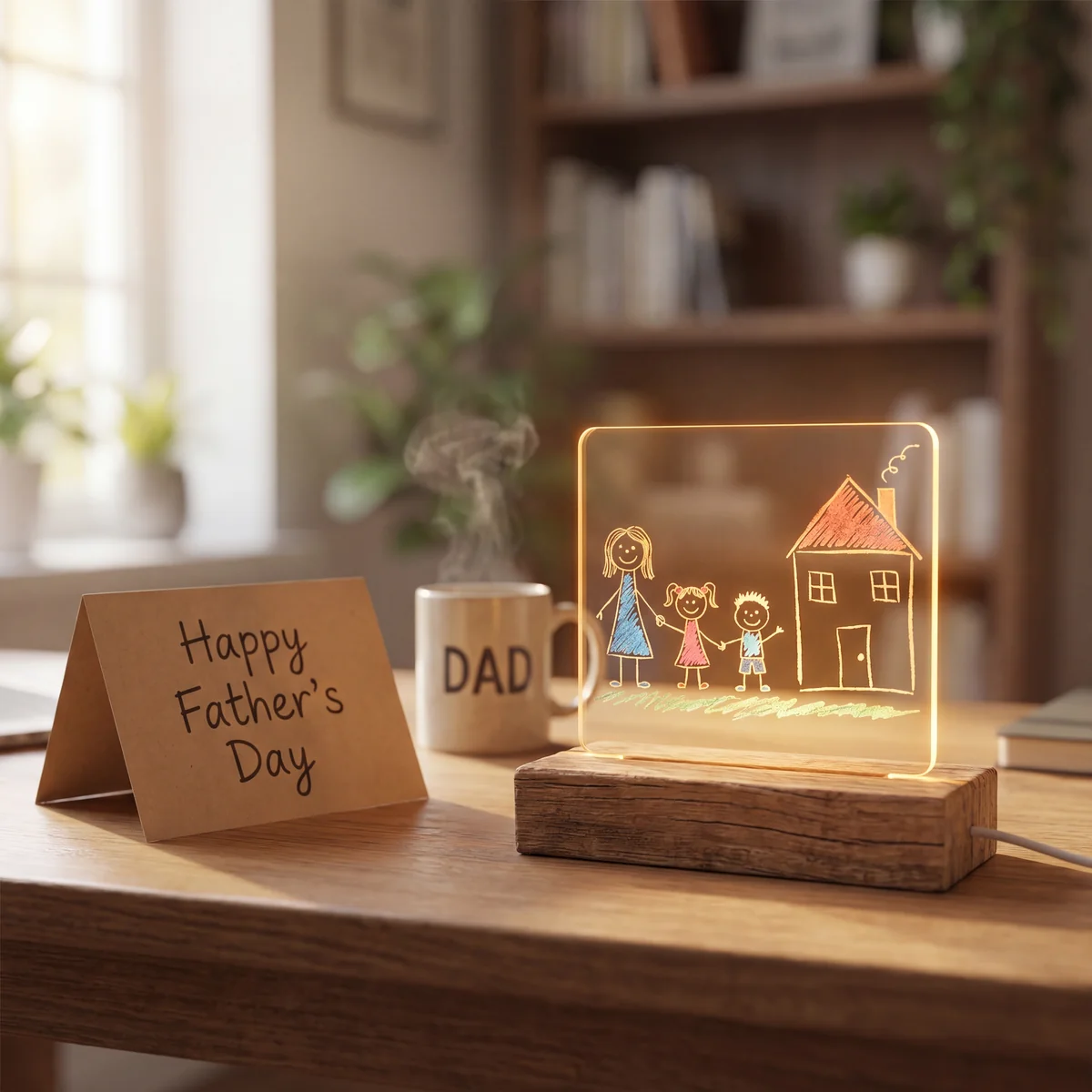
This gift is specific in a way that generic options simply cannot be. It's your child's self portrait, made into a real object that glows softly in the dark, sitting in Grandma's space as a permanent reminder of that kid at this exact age. Father's Day is already a holiday that centers on family connection. A handmade-to-order night light built around a child's drawing of themselves is exactly the kind of gift that fits that spirit without trying too hard.
It's also genuinely useful. The LED base gives off a soft, warm light. It's not just a keepsake that gets tucked in a drawer. Grandma will actually turn it on.
Tips for Getting the Best Result from a Kid's Self Portrait
Self portraits from kids come in a pretty wide range of styles, from nearly photorealistic attempts by older children to gloriously abstract interpretations from younger ones. Both work. Here's what actually helps our process.
First, darker lines reproduce better than faint pencil sketches. If your child drew their portrait in crayon, marker, or even colored pencil with some pressure behind it, you're in good shape. Light graphite lines on lined paper are workable, but they benefit from a photo taken in good natural light rather than a dim indoor shot.
Speak of which: how you photograph the drawing matters almost as much as the drawing itself. Lay it flat on a solid surface, step outside or stand near a window, and shoot straight down without a flash. Avoid shadows across the paper. A clean, well-lit photo of even a simple drawing gives our team a lot more to work with than a blurry or shadow-crossed scan.
If the portrait is on lined paper, don't worry. We can work around that. Just mention it when you upload and we'll handle it from there.