Why a Self Portrait Changes What This Gift Means
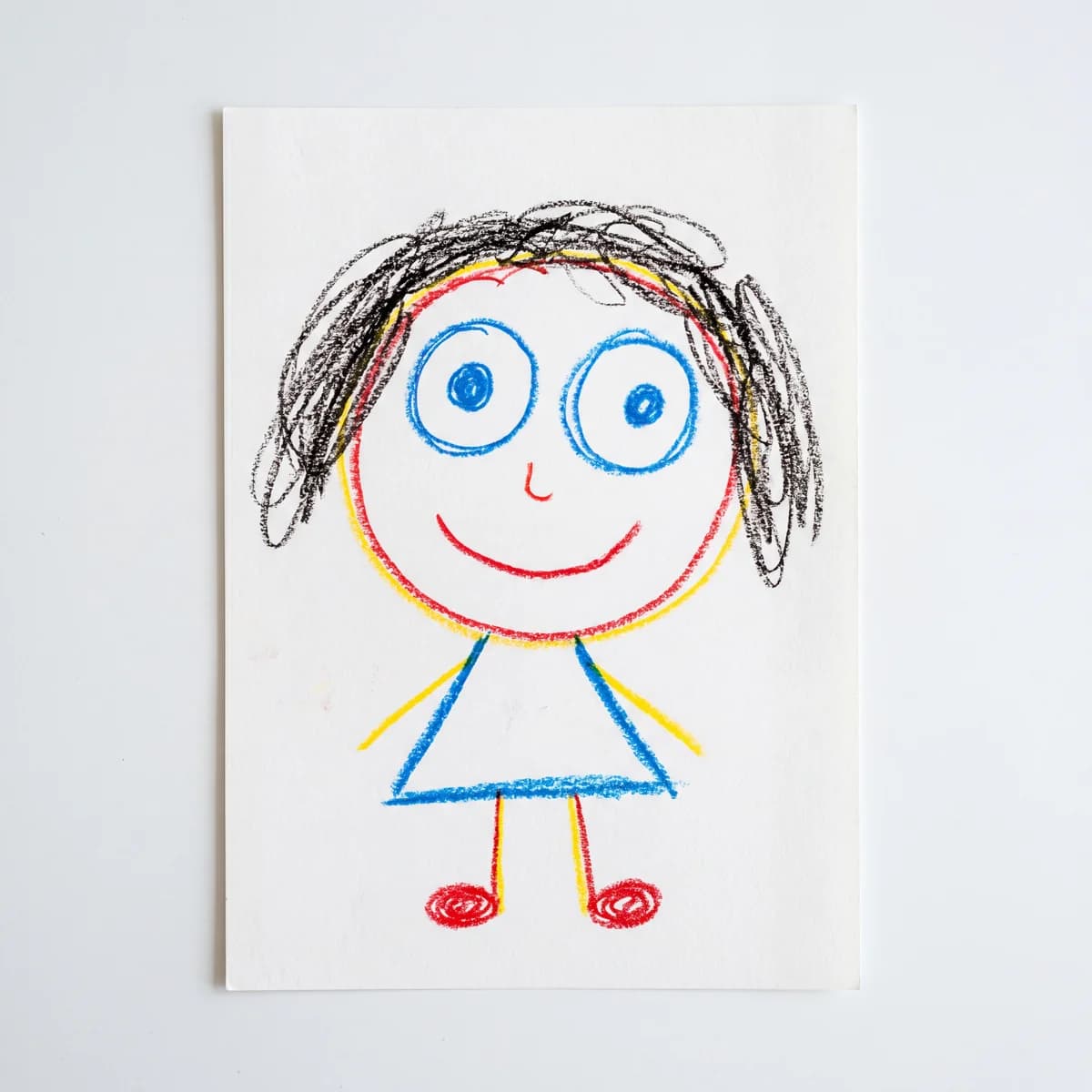
Most baptism gifts for Dad land somewhere between forgettable and well-intentioned. A cross, a frame, a keepsake box. These are fine objects. But a self portrait that your child drew, turned into a glowing night light, is something different. It's the kid's face as they imagine their own face, rendered in whatever medium they had on hand, preserved in UV ink on clear acrylic.
There's something specific about a self portrait that a drawing of a house or a rainbow doesn't quite do. The child was looking inward, or at least at themselves in a mirror or from memory, and putting that down on paper. For a baptism, a day that's genuinely about who a person is and what they're becoming, that feels like the right kind of art to hand Dad.
It doesn't need to be a masterpiece. It just needs to be theirs.
What Makes This Better Than a Typical Baptism Gift for Dad
The default baptism gift for a father tends to be something religious in a general way, or something sentimental in a vague way. Neither of those is wrong, but they also don't require anyone to know anything specific about the person receiving them.
This gift requires knowing two things: that a child exists, and that the child drew a picture of themselves. That specificity is the whole point. Dad isn't getting a baptism gift that could belong to anyone. He's getting a night light that has his kid's face on it, in his kid's handwriting, made permanent through a UV print process on clear acrylic.
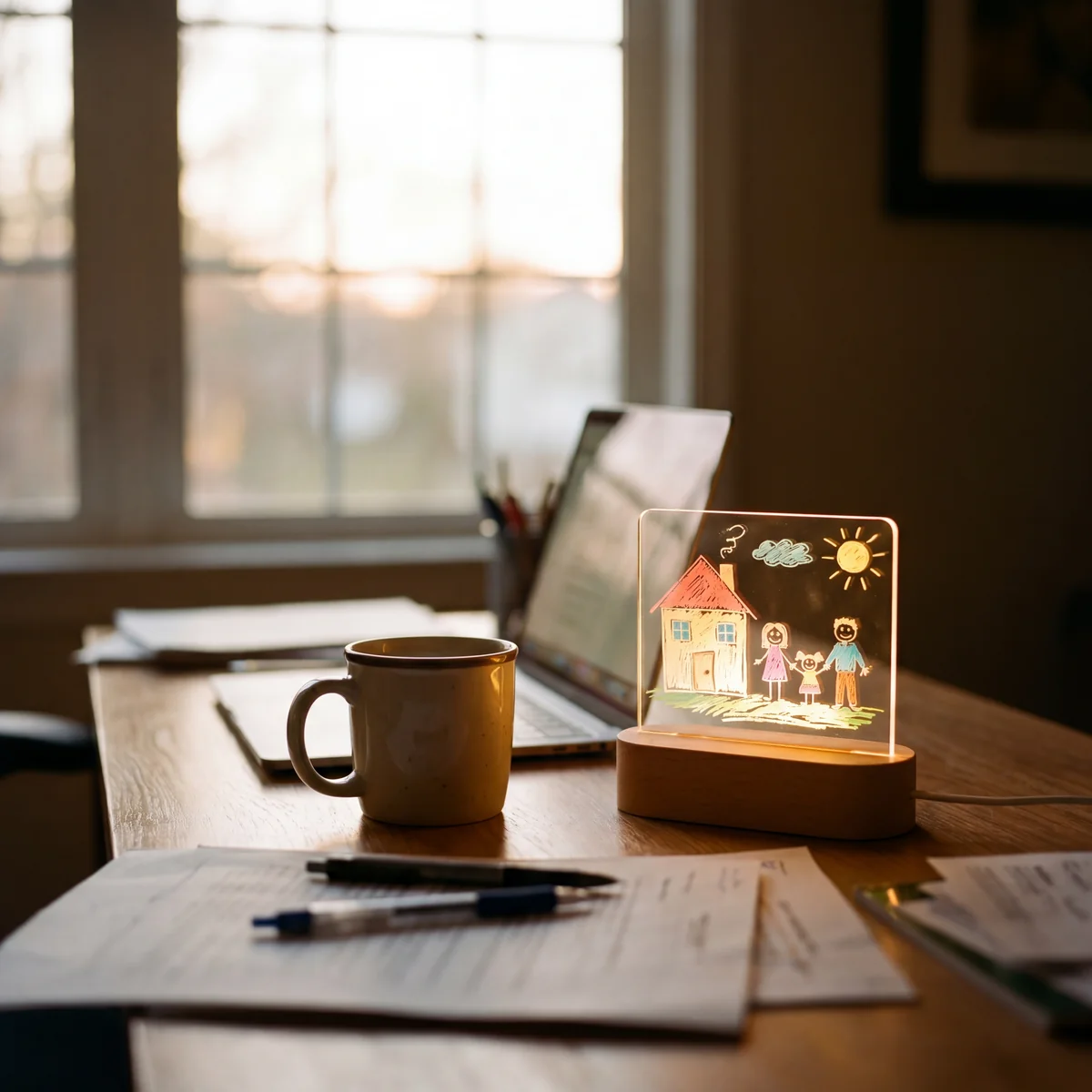
It also functions as an object in a room. It plugs in. It glows. It does something. That makes it easier to display than a certificate or a framed print that requires finding a nail and picking a wall. Dad can set it on a shelf, a nightstand, or a desk, and it's immediately at home.
Tips for Getting a Good Self Portrait Scan or Photo
A self portrait done by a child is almost always going to have some quirks. That's expected, and honestly preferred. What matters for the UV printing process is clarity, not artistic sophistication.
If the drawing is on lined paper, that's fine. We work with what we receive. Lined paper does show up in the print, so if you'd prefer a cleaner background, trace the drawing onto plain white paper first or take the photo in bright, even light so the lines fade a bit. A photo taken directly overhead, with no shadows crossing the drawing, gives us the most to work with.
If your child used markers or crayons, the colors tend to translate well to acrylic. Pencil-only drawings can look a little faint, so increasing the contrast slightly before uploading helps. You don't need photo editing software for this, most phone cameras have a basic contrast slider built into their edit tools.
Upload the highest resolution image you have. Even a steady smartphone photo taken in daylight is usually enough.