Why a Godparent Deserves More Than Another Candle This Christmas
Godparents occupy a particular kind of space in a child's life. They're not a parent, not quite an aunt or uncle, but something in between. The relationship is chosen, intentional, and usually built on genuine affection. That's exactly why a mass-produced gift feels a little off. A godparent tends to pay attention to who their godchild actually is.
When that godchild has a beloved pet, the godparent almost certainly knows about it. They've heard the stories, seen the photos on a phone screen, maybe even met the animal. So when the gift arrives and it's a glowing version of the kid's own drawing of that pet, it lands differently than a coffee mug or a picture frame from a department store.
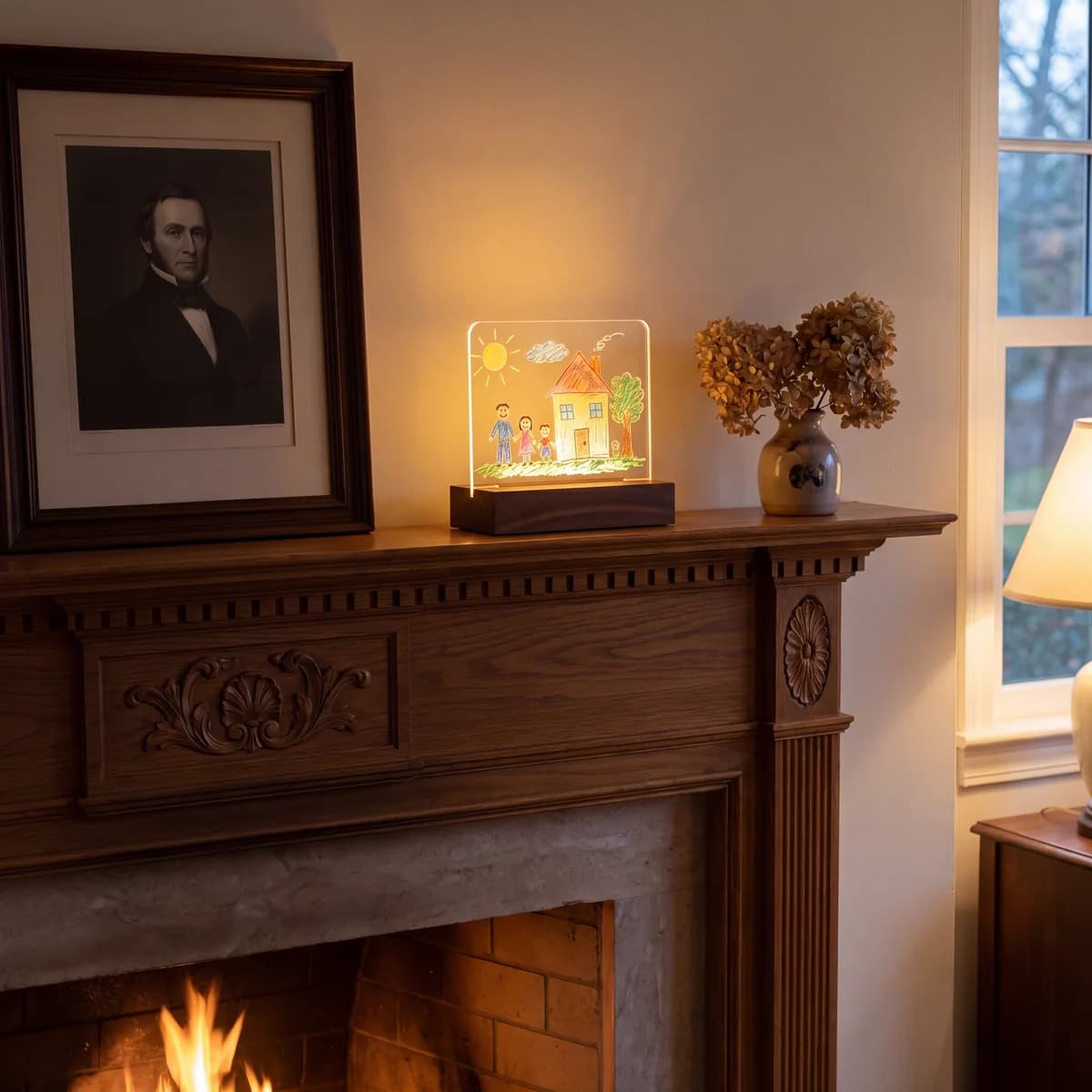
This is the kind of gift a godparent puts somewhere visible, not in a closet. It carries a story. It shows the godchild's actual handwork. And it keeps glowing long after Christmas morning has come and gone.
What Makes This Different From a Framed Print or a Photo Gift
Photo gifts are fine. Framed prints are fine. But they've been done. A lot. What makes this night light different is that it starts with the child's own drawing, not a photograph edited through a filter.
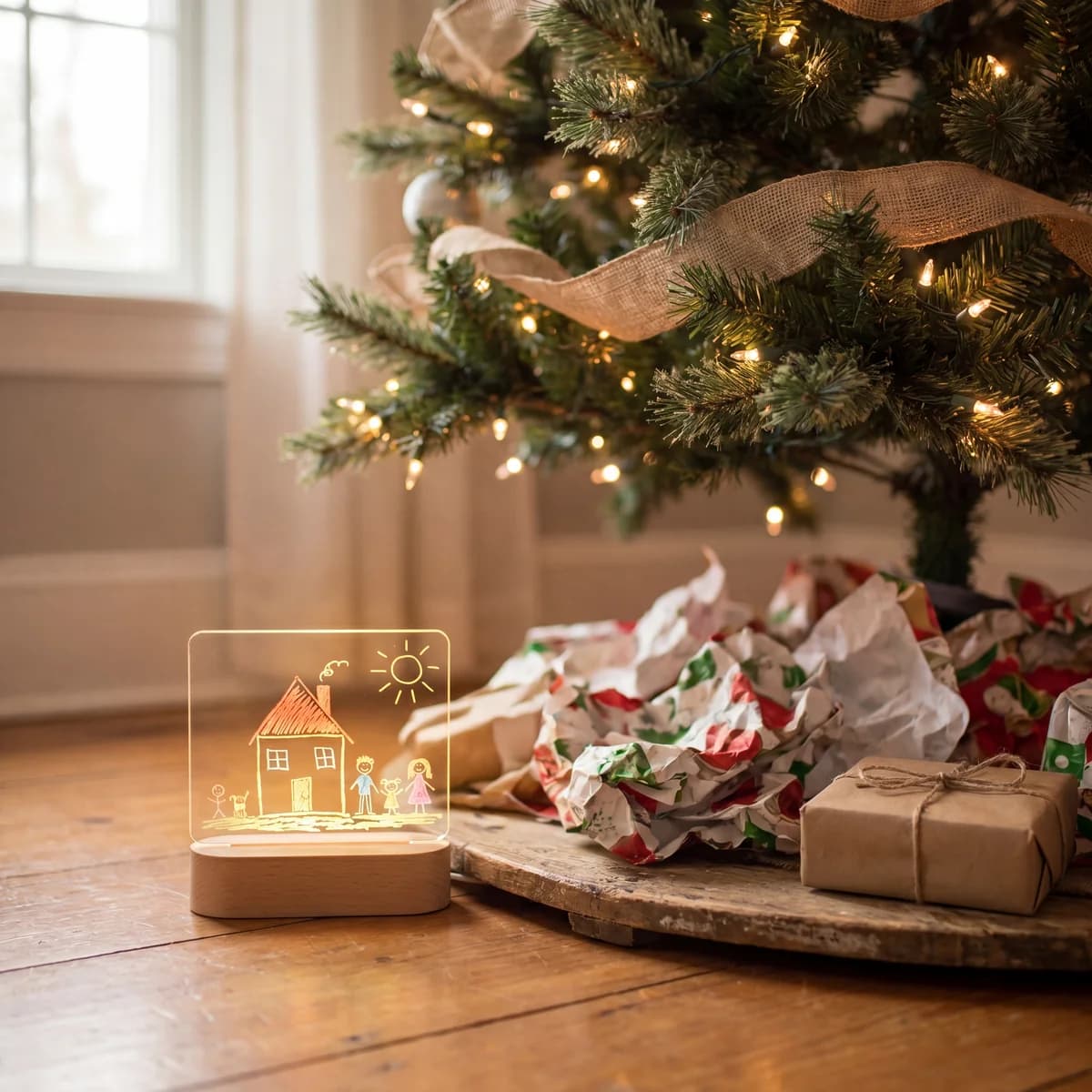
The drawing goes through our UV printing process, which reproduces it directly onto a clear acrylic plaque. That means the crayon strokes, the wobbly lines, the way a six-year-old draws a dog's ears too big on purpose, all of that comes through. The wooden LED base sits underneath the plaque and casts warm light upward through the engraved or printed image. When the room is dim, the plaque glows. When the light is off, it still looks clean sitting on a shelf.
It plugs in via USB, so it works with any standard USB adapter or a laptop port. There's no complicated setup. The godparent takes it out, plugs it in, and it works. That simplicity matters when you're shipping a gift to someone's home and you won't be there to explain anything.
Tips for Getting the Best Drawing of Your Family Pet
Not every drawing scans equally well, and pet drawings in particular have a few common pitfalls worth knowing about before you hand your kid the markers.
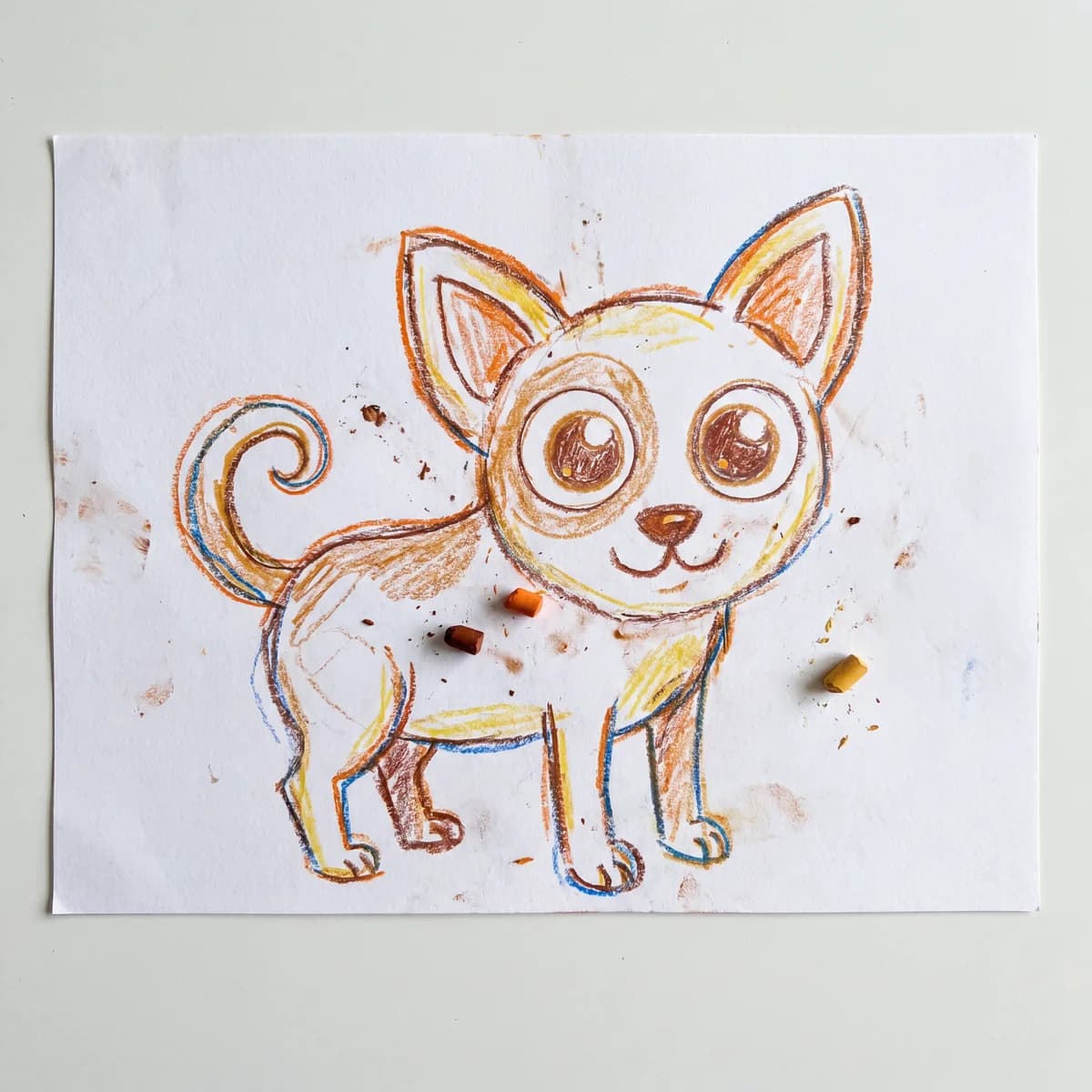
First, white paper works better than lined or graph paper. The lines show up in the UV print and can compete visually with the drawing itself. If your child already drew the pet on lined paper, don't stress, we can often work with it, but plain white gives us more to work with.
Second, encourage darker lines. Light pencil sketches can lose detail in the printing process. Markers, crayons, colored pencils, and even ballpoint pen all tend to reproduce well. Watercolors can work too, as long as the contrast is reasonable.
Third, the pet doesn't need to be perfectly proportioned or recognizable to anyone outside the family. That's not the point. The drawing just needs to be clearly the child's, clearly about the animal they love. A dog with three legs and a huge head is completely fine. We've seen stranger and they turned out great.
Upload the photo of the drawing as flat and well-lit as you can manage. Avoid harsh shadows across the page.