Why a Name Drawing Hits Different at the End of the School Year
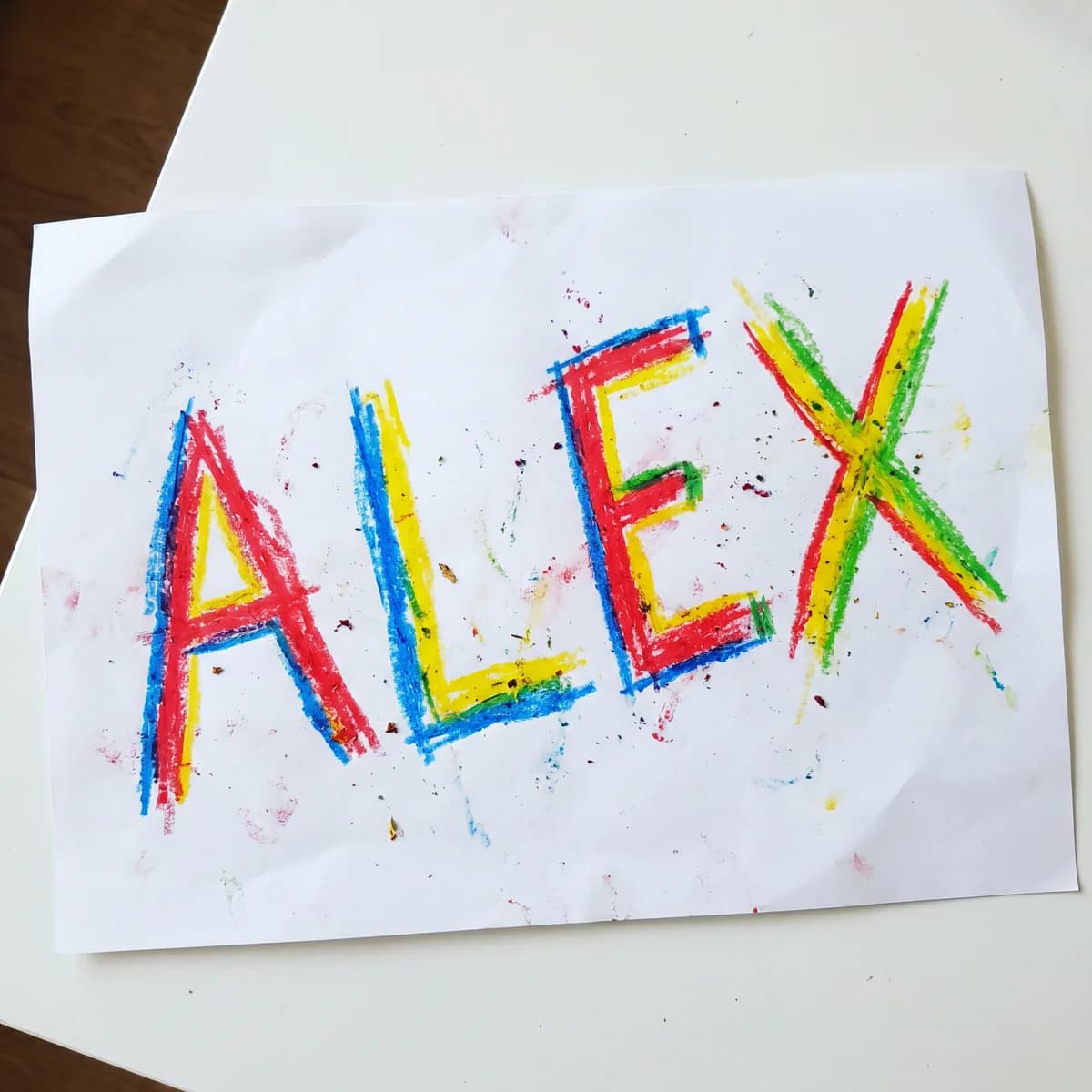
There's something specific that happens between September and June. Kids go from printing their name in chunky, uncertain letters to something that actually looks like their name. The proportions are still off. The letters might wander uphill. But the confidence is there, and that shift is real.
Grandmas notice this stuff. They track it. They're the ones who remember what the handwriting looked like last year and comment on how much it's changed. A name drawing captures exactly that moment in time, the version of your child's handwriting that exists only in this particular spring, in this particular grade.
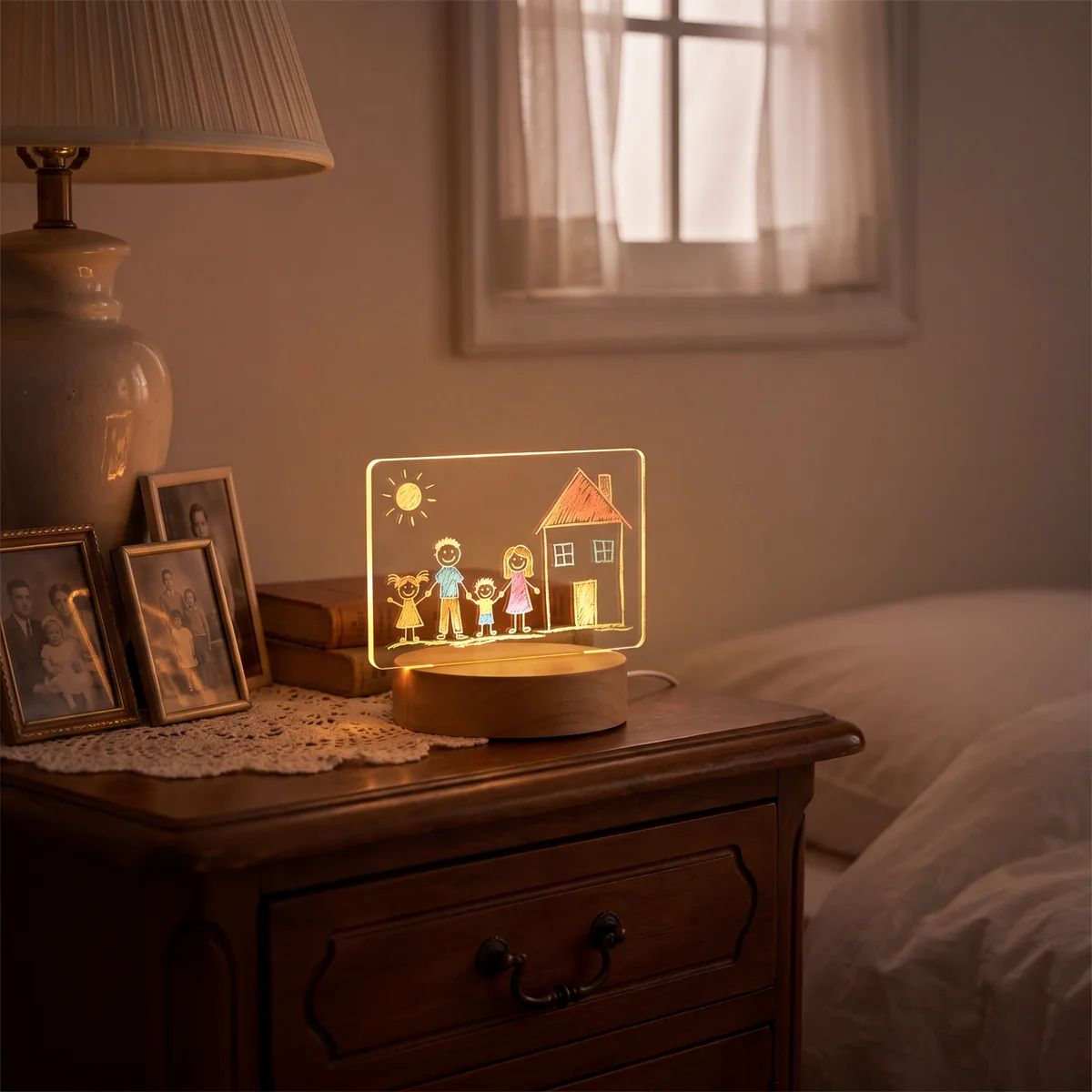
An end-of-school-year gift tied to that kind of milestone isn't just a present. It's a timestamp. And a glowing one that sits on a nightstand is going to get a lot more attention than a drawing tucked into a card.
What Makes This Better Than Another End-of-Year Gift for Grandma
Flowers are gone in a week. A gift card is fine but forgettable. A framed photo is nice, but Grandma probably already has several of those on the wall.
This is different because the object itself came from your child's hand. Not a photo of your child, not a drawing of your child, but something your child actually made. The name they wrote. That specific pen pressure, that particular way they form a lowercase 'a' or loop a 'g'. It's irreproducible by any adult, and it's irreproducible by that same kid in two years.
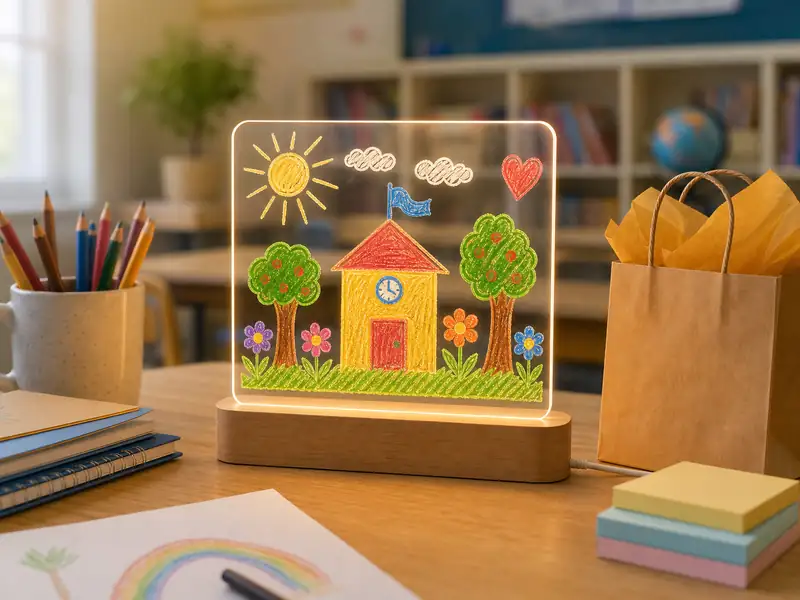
The LED base adds a practical dimension, too. This isn't a keepsake that goes in a box. It plugs into a USB port, glows warm amber, and functions as a real night light. Grandma can use it every single night. That kind of regular presence is what turns a gift into something meaningful over time, not just a nice gesture on the day it arrives.
Tips for Getting the Best Result From a Name Drawing
The name your kid wrote doesn't need to be perfect. In fact, perfect isn't what makes these look good. What matters is contrast and clarity, so here are a few practical things to keep in mind when you scan or photograph it.
Use dark ink on white or very light paper. Black marker on plain white printer paper is ideal. Pencil can work, but only if the lines are firm and not too faint. Avoid heavily textured paper if you can, since shadows from the grain can create noise in the print.
If the drawing is on lined paper, that's completely fine. We can work around lines during our prep process, though clean white paper will always give you a crisper result. Also, make sure the whole name fits in the frame of your photo. If it's cut off on the edges, send us the full sheet and we'll crop it properly on our end.
Natural lighting or a flatly lit scan gives us the most to work with. Avoid photos taken at an angle or in low light. When in doubt, upload it and we'll let you know if we need a better version before we print anything.