Why an Animal Drawing From Your Kid Hits Different Than Any Store-Bought Gift
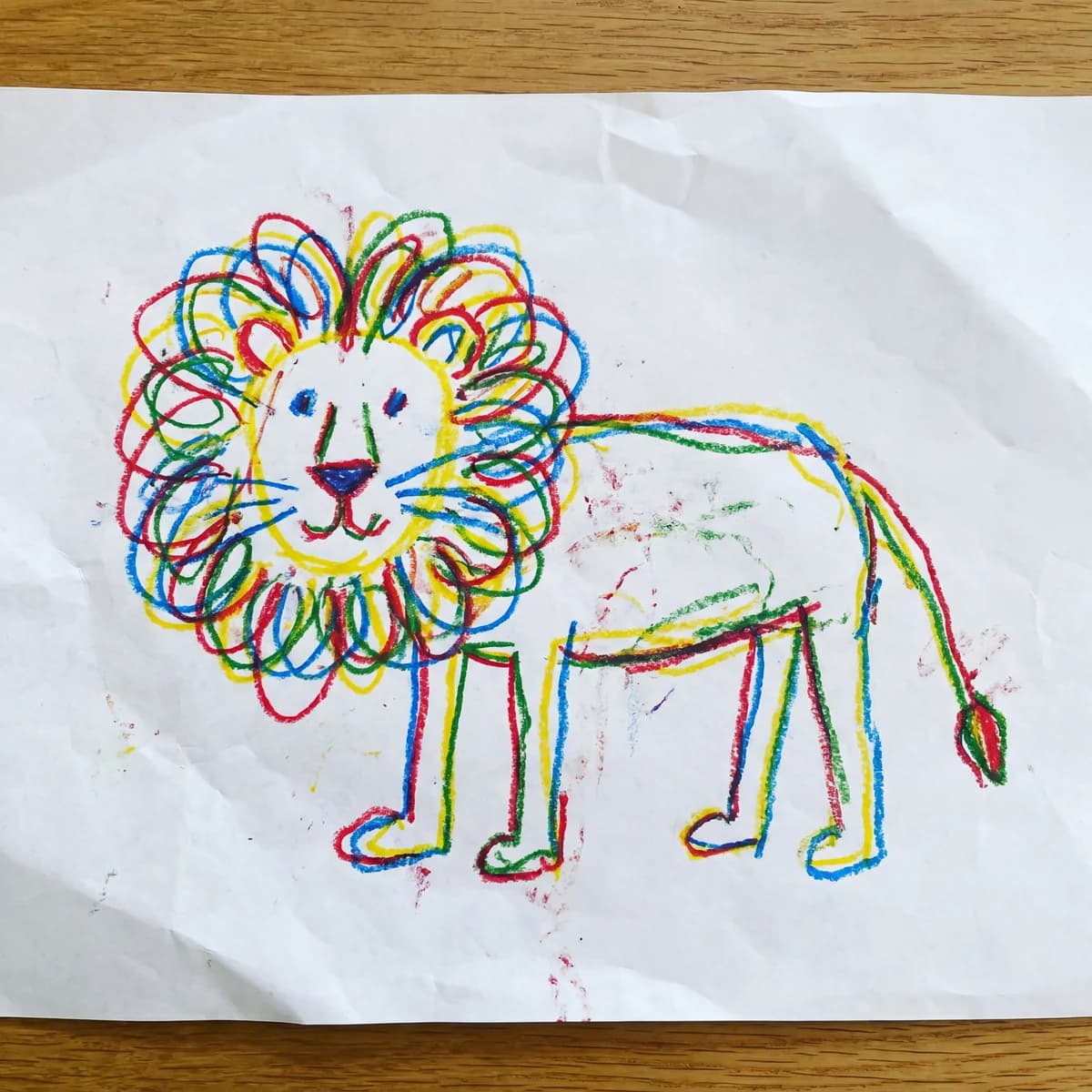
There's something specific about the way a child draws an animal. The legs are maybe a little uneven. The tail is enormous. The dog looks faintly like a horse, and your kid was completely confident about that the whole time. That drawing has a personality to it that no licensed character product or generic gift set will ever have.
Mom already has enough candles and coffee mugs. What she probably does not have is a softly glowing acrylic plaque of the bunny your kid drew in March sitting on her dresser or desk. That is a different category of gift entirely.
This is especially true at the end of the school year, when there's a real sense of a chapter closing. Your child drew that animal sometime during the year. It exists on a piece of paper right now. Turning it into something durable and lit from within is a way of saying: this year mattered, this drawing mattered, and so did the person who made it.
What This Gift Actually Is (and How It Works)
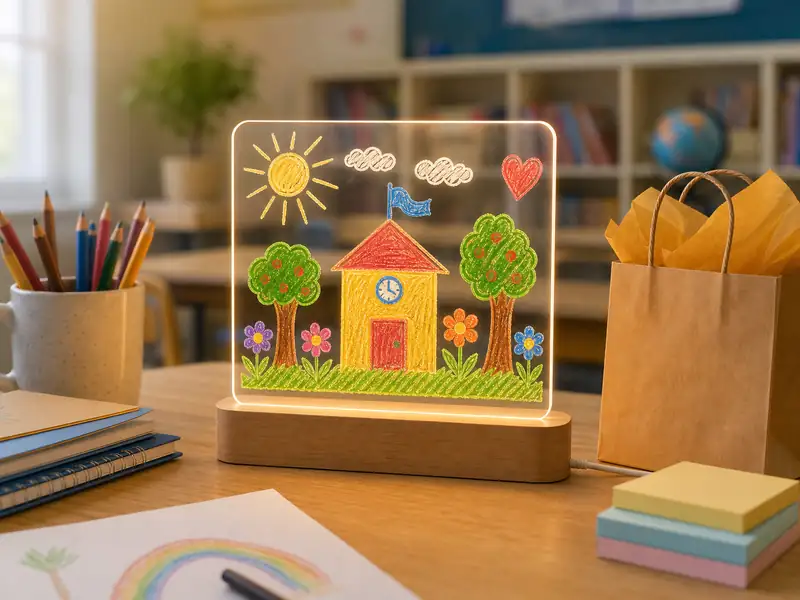
The product is straightforward. You upload your child's animal drawing, our team in San Leandro, California processes the artwork, and we UV-print it directly onto a clear acrylic plaque. UV printing means the image is cured into the surface rather than sitting on top of it, so the lines and colors stay sharp and the piece feels solid, not like a cheap lamination.
The acrylic plaque sits in a warm wooden LED base. When you plug it into USB power, the base sends light up through the acrylic and the drawing glows. The effect is warmer and softer than you might expect. It reads more like ambient light than a novelty lamp, which is part of why these end up staying out on desks and nightstands rather than going into a drawer.
When it's unplugged, it functions as a small display piece. The print is clear and detailed in regular light. The base has a natural wood grain finish. It looks intentional, not like a craft-fair project.
Getting the Most Out of Your Child's Animal Drawing
Animal drawings tend to have a few common characteristics, and it helps to know what works well before you upload.
High contrast drawings come out the best. If your kid used a dark marker or crayon on white paper, you're in good shape. Pencil-only drawings can work, but the lighter the lines, the more we have to work with on our end. If you have two versions, one inked and one pencil, go with the inked one.
Don't worry too much about lined paper. We get this question a lot. Notebook lines are not ideal, but they're workable. If the animal is the clear focal point and the lines aren't running directly through important parts of the drawing, we can minimize them during processing. Plain white paper is better if you have the option to re-draw or re-photograph.
Also, a straight-on photo of the drawing taken in good natural light will produce a cleaner result than a scan with shadows or a phone photo taken at an angle. Flat, evenly lit, no harsh flash.