Why a Child's Animal Drawing Means So Much to Grandma
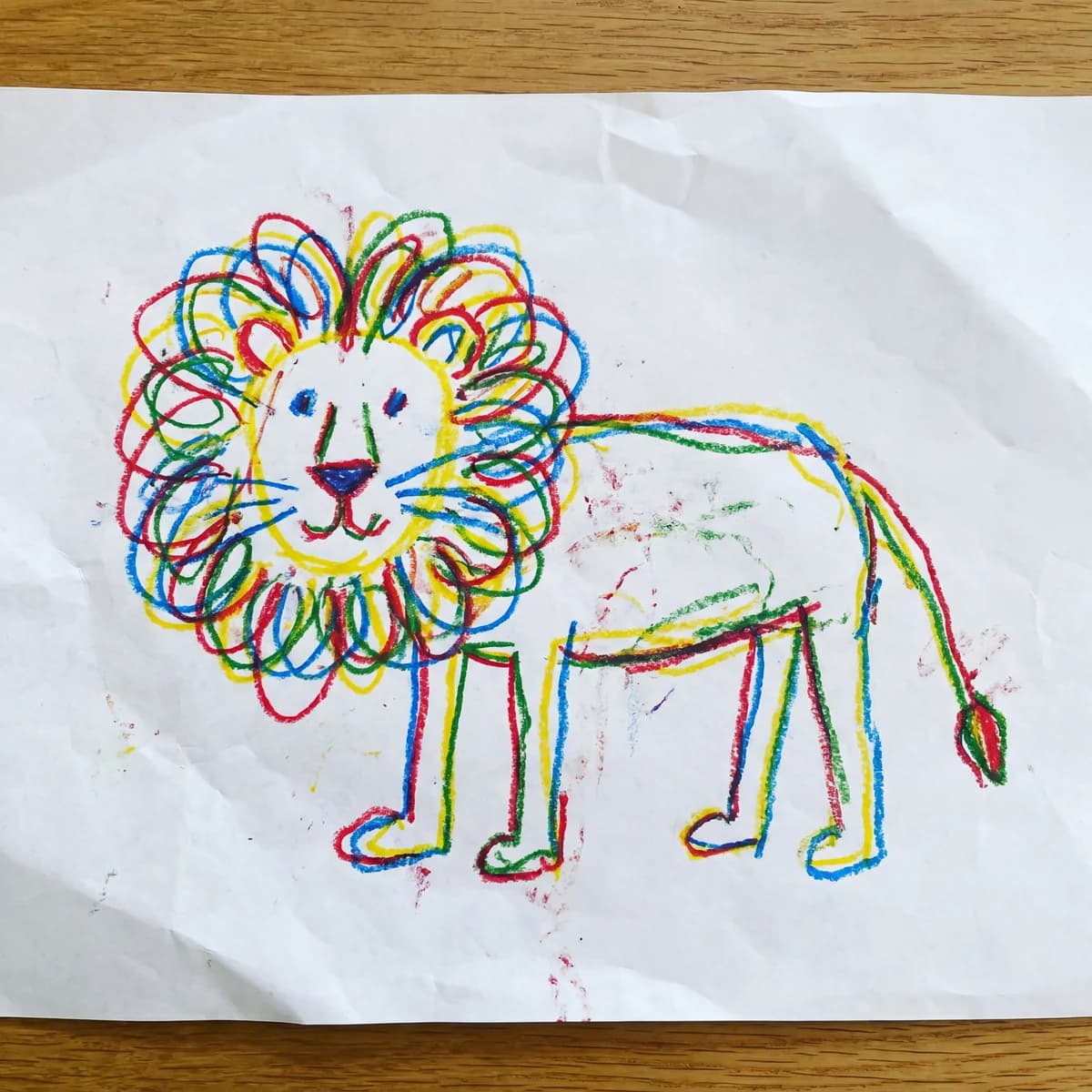
There's a particular kind of animal drawing that only a child makes. The horse with five legs. The cat that looks more like a cloud with a tail. The dog that is, somehow, also a little bit of a dragon. These drawings are not polished, and that's exactly the point. They are a record of how your child sees the world right now, at this age, in this moment.
Grandma knows this. She probably already has a version of this drawing held to the refrigerator by a magnet somewhere. But a milestone birthday is a different kind of occasion. It calls for something that can sit on a nightstand or a bookshelf and stay there for years, not something that yellows and curls at the edges.
When the gift is built around your child's actual drawing, not a stock image of an animal, not a licensed character, but the real thing your kid made, it lands differently. It's personal in a way that a spa set or a gift card simply isn't. For a grandmother hitting a significant birthday, that specificity matters more than almost anything else you could wrap up and hand her.
What Makes This Better Than Another Milestone Birthday Gift
Milestone birthdays attract a certain category of gift. The big floral arrangement. The charm bracelet with the birthstone. The coffee table book about a place she's always wanted to visit. None of those are bad, but they're also not hard to forget. They don't have a story attached to them that only your family can tell.
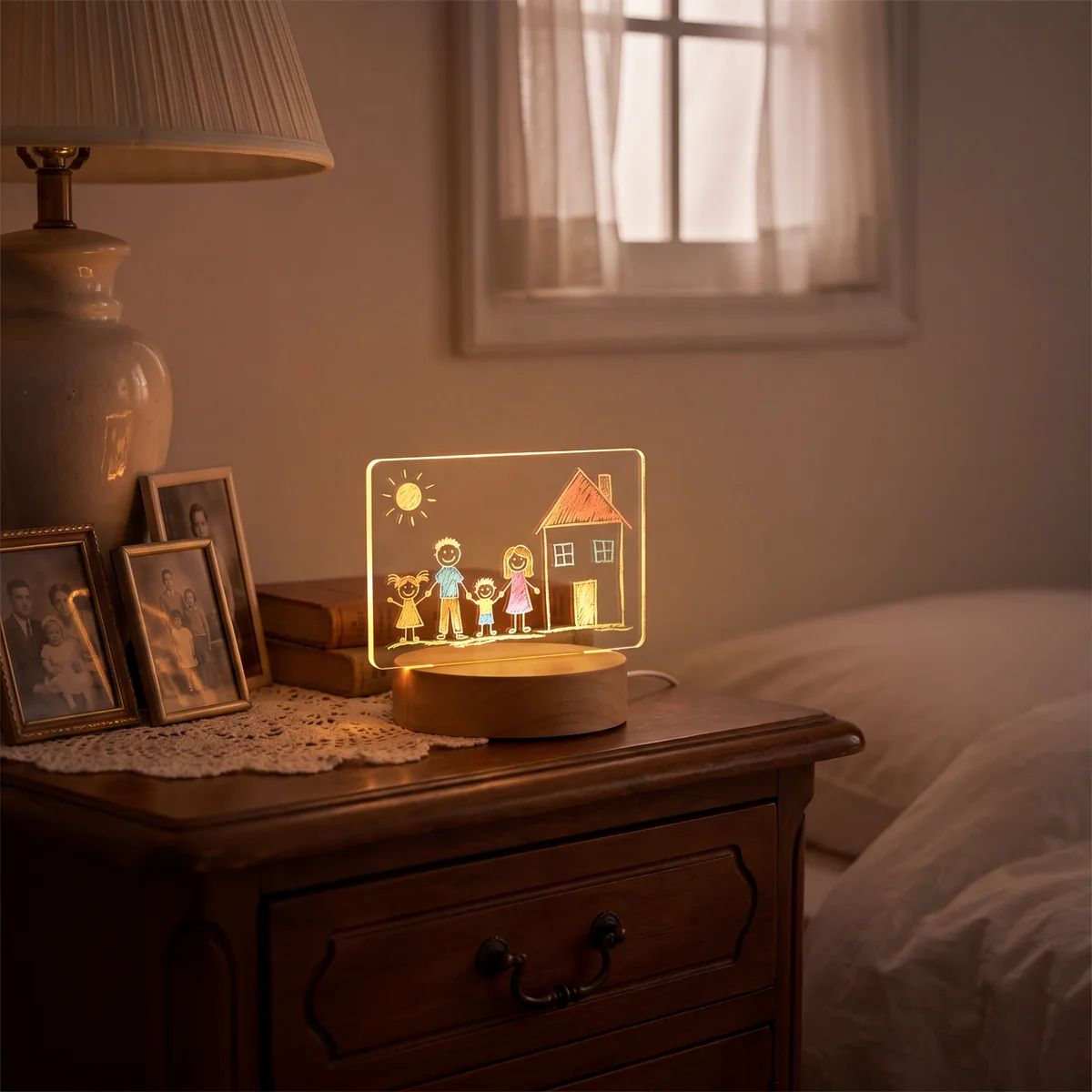
This does. When someone asks Grandma where that glowing light on her dresser came from, she doesn't say 'oh, my daughter ordered it online.' She says 'my grandchild drew that.' That's a conversation she gets to have over and over, and it connects her to your child in a visible, daily way.
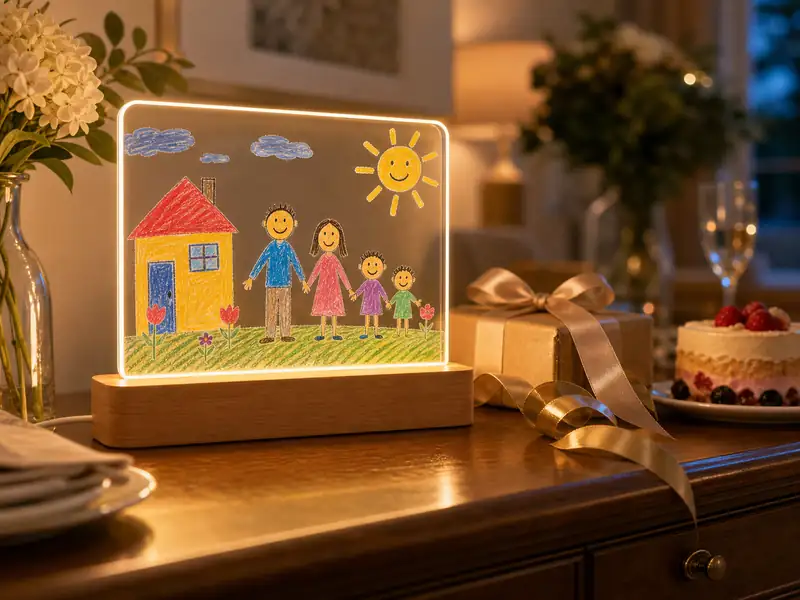
The product itself is also built to last. The image is UV-printed directly onto acrylic, so it doesn't fade the way paper does and it doesn't look like a phone-printed photo. The wooden base is warm in tone and simple in design, which means it fits into most adult living spaces without looking like a child's toy. It's a real object with some presence to it, not a novelty.
Tips for Getting the Most Out of Your Child's Animal Drawing
Most drawings we receive are on regular printer paper or construction paper, sometimes lined notebook paper, and they work fine. A few things that help: scan the drawing rather than photographing it if you can, because camera shots often pick up shadows along the folds. A flat, well-lit photo taken from directly above with no glare is the next best option.
For animal drawings specifically, the simpler the outline, the more it pops when lit. A drawing where the animal is roughly centered with some white space around it tends to translate very well to acrylic. That said, if your child drew a whole scene, a turtle in a pond with cattails, a bear in front of trees, we can work with that too. Our team reviews every file before printing.
If the drawing is in pencil only, a light touch on the pencil lines can sometimes make the image harder to read. Drawings with some crayon, marker, or colored pencil generally have better contrast and come out more vivid on the acrylic. If you're not sure whether your drawing will work, just upload it and we'll take a look before we commit to production.