Why This Particular Combo Hits Different
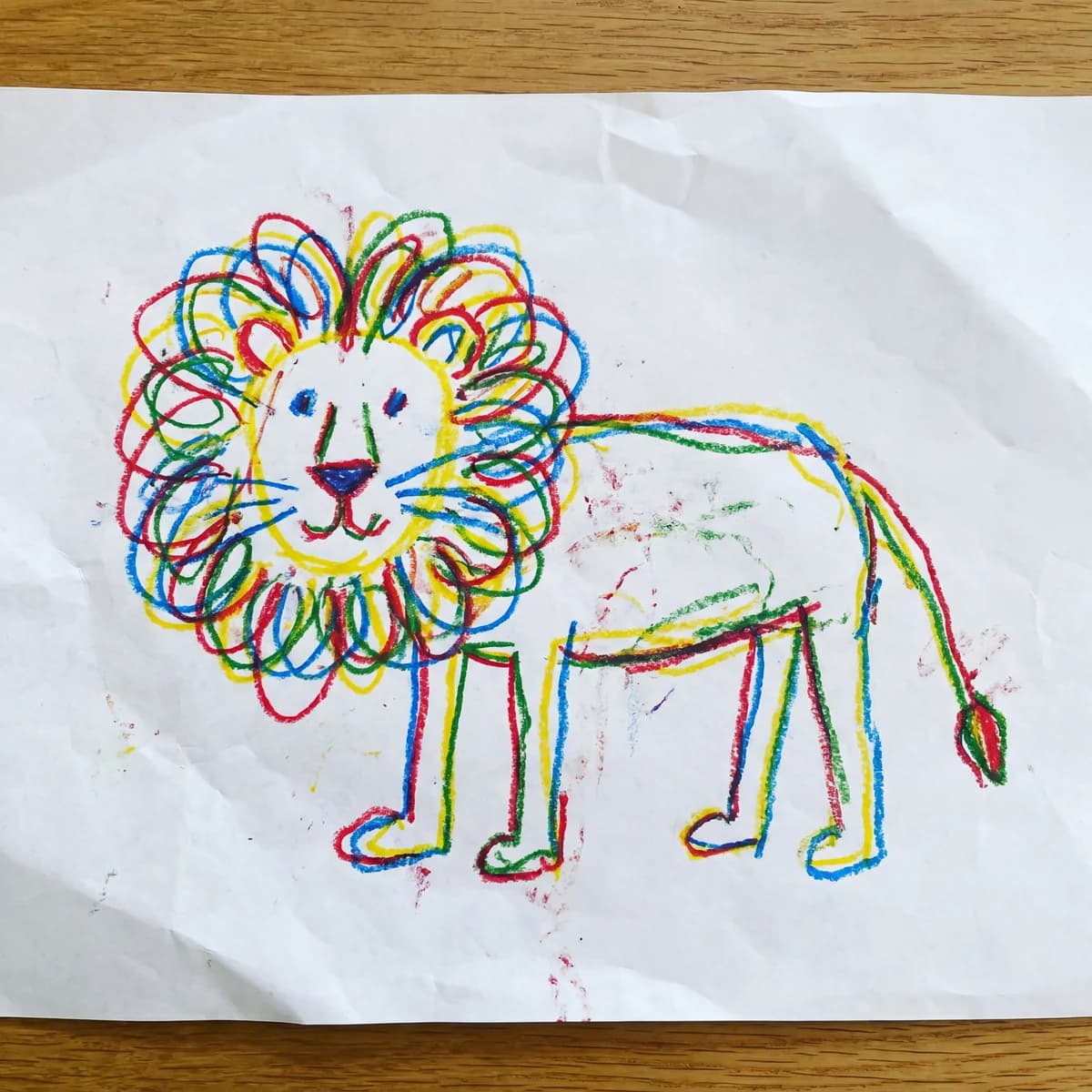
Kids go through phases where they draw animals constantly. Dogs with enormous heads, horses that look like they've had a long week, cats rendered in seventeen shades of orange crayon. Those drawings live on the fridge for a while, then quietly disappear into a folder somewhere. Dad, meanwhile, probably has a desk or a nightstand that holds nothing more personal than a charging cable.
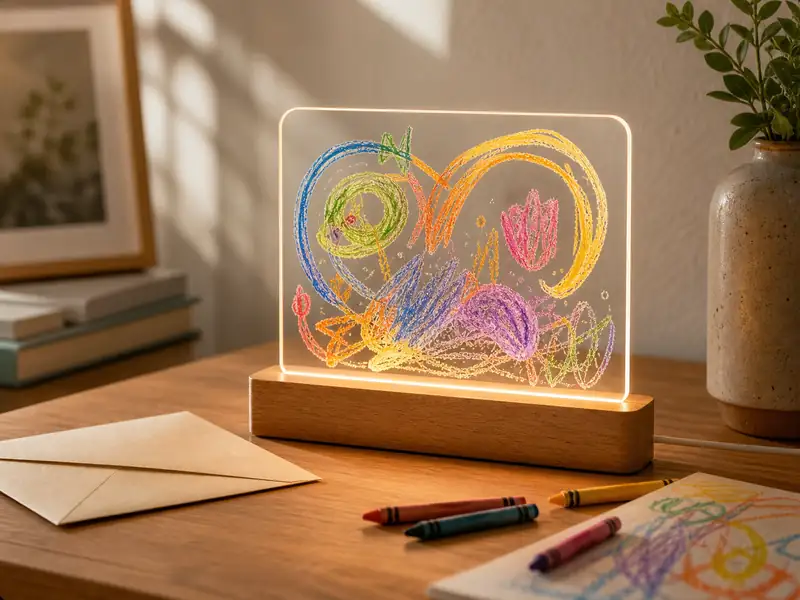
Pairing your child's animal drawing with a gift meant specifically for Dad closes a gap that most gifts don't even try to close. It's not a coffee mug with a paw print on it. It's not a generic framed print. It's the actual thing your kid drew, reproduced in a way that makes it feel intentional and permanent, sitting somewhere Dad actually looks every day.
There's no occasion required for this to make sense. Sometimes the right moment is just a Tuesday when you want Dad to know that the drawing your kid made of a rhinoceros last month was worth saving.
What This Gift Does That a Generic One Can't
Most just-because gifts default to something consumable or forgettable. A nice candle, a snack box, a card that gets recycled. Those aren't bad, but they don't accumulate meaning the way an object tied to a specific child, a specific drawing, and a specific stage of childhood does.
This night light is a record of who your kid was at the age they drew that animal. The wobbly lines, the oversized eyes on the elephant, the fish that's clearly half-crayon and half-wishful thinking. When it's printed on acrylic and lit from behind, those details don't disappear. They become the point.
For Dad specifically, this kind of gift tends to land somewhere between "display item" and "conversation piece." It's the sort of thing a coworker notices on a desk and asks about, and Dad gets to say his kid drew that. That moment is worth more than anything you could pull off a shelf at a gift shop.
Tips for Getting the Most Out of an Animal Drawing
Animal drawings from kids tend to be some of the best source material we work with, because kids don't draw animals the way adults expect them to. The proportions are off, the colors are ambitious, and there's usually some detail that makes absolutely no anatomical sense but works completely on its own terms. That's the stuff that prints beautifully.
A few practical things to keep in mind when you photograph or scan the drawing. First, flat lighting works better than a phone photo taken at an angle on the kitchen counter. Lay the drawing down on a hard surface and shoot straight down. Second, lined paper, construction paper, and even slightly crumpled notebook paper all work fine. We account for background texture during our prep process. Third, if your kid used markers or colored pencils, colors will reproduce more accurately than if they used dry crayon with a lot of paper texture showing through, though crayon drawings still come out with real character.
If the drawing has a name or a date written on it, we'll include that exactly as it appears. Just note in the order comments if you'd like us to crop it out instead.