Why an Animal Drawing From His Kid Hits Different Than a Tie
There is a specific category of things dads actually keep. Not the generic mug. Not the cologne sampler. The things they keep are the ones that prove a small person thought about them specifically, and this is one of those things.
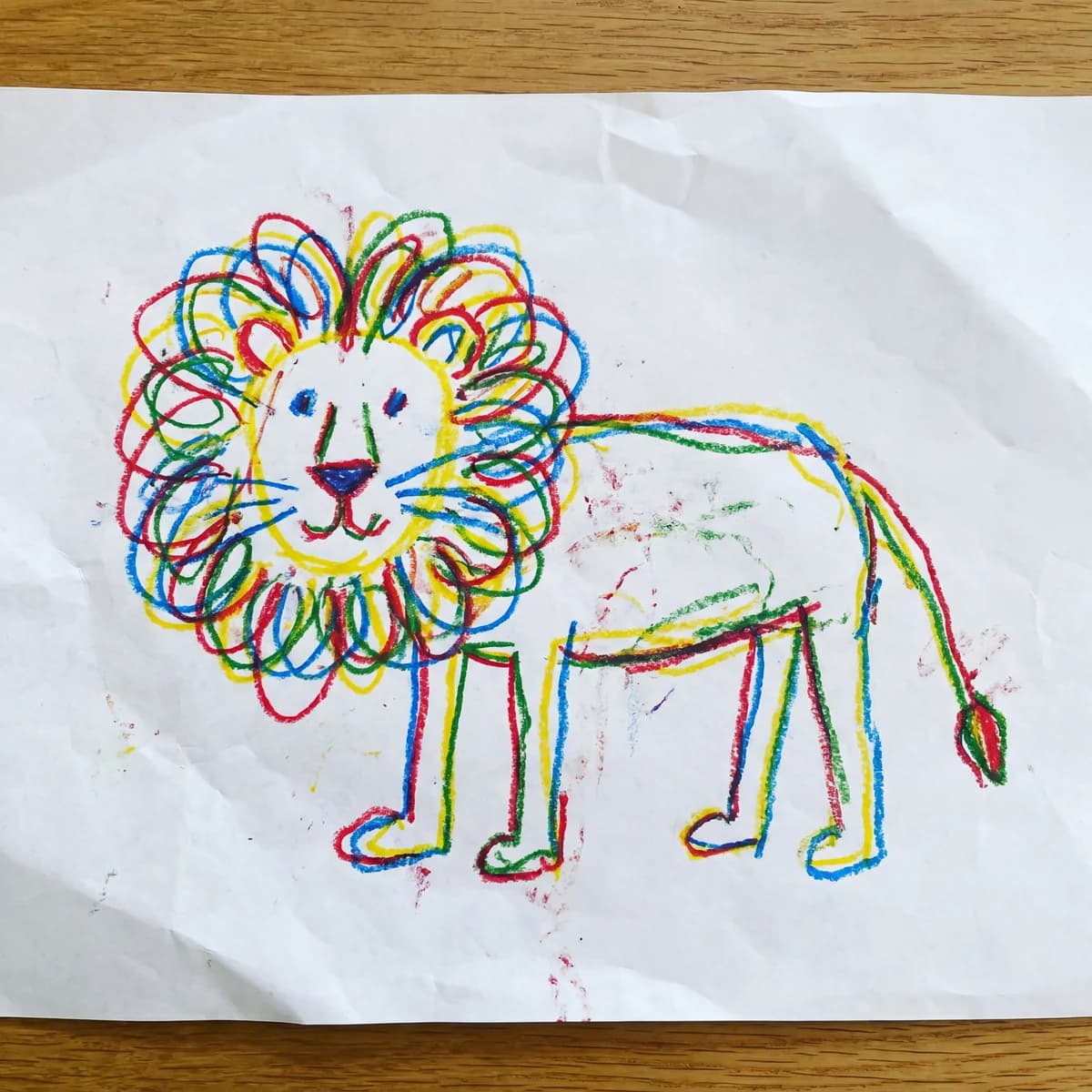
Animals are usually the first subjects kids draw with any real commitment. A wobbly dog, a giraffe with a neck that takes up most of the page, a cat that looks more like an oval with ears. Whatever your child drew, that drawing carries something a store-bought gift simply cannot replicate: it is your kid's hand, your kid's vision, and whatever strange creative logic a six-year-old applies to depicting a lion.
Turning that drawing into a lit acrylic plaque means it stops living in a folder or on the refrigerator and starts living somewhere Dad can see it every day. That is the emotional argument for this gift. It is not complicated, but it is solid.
What This Gift Actually Is, and How It Works
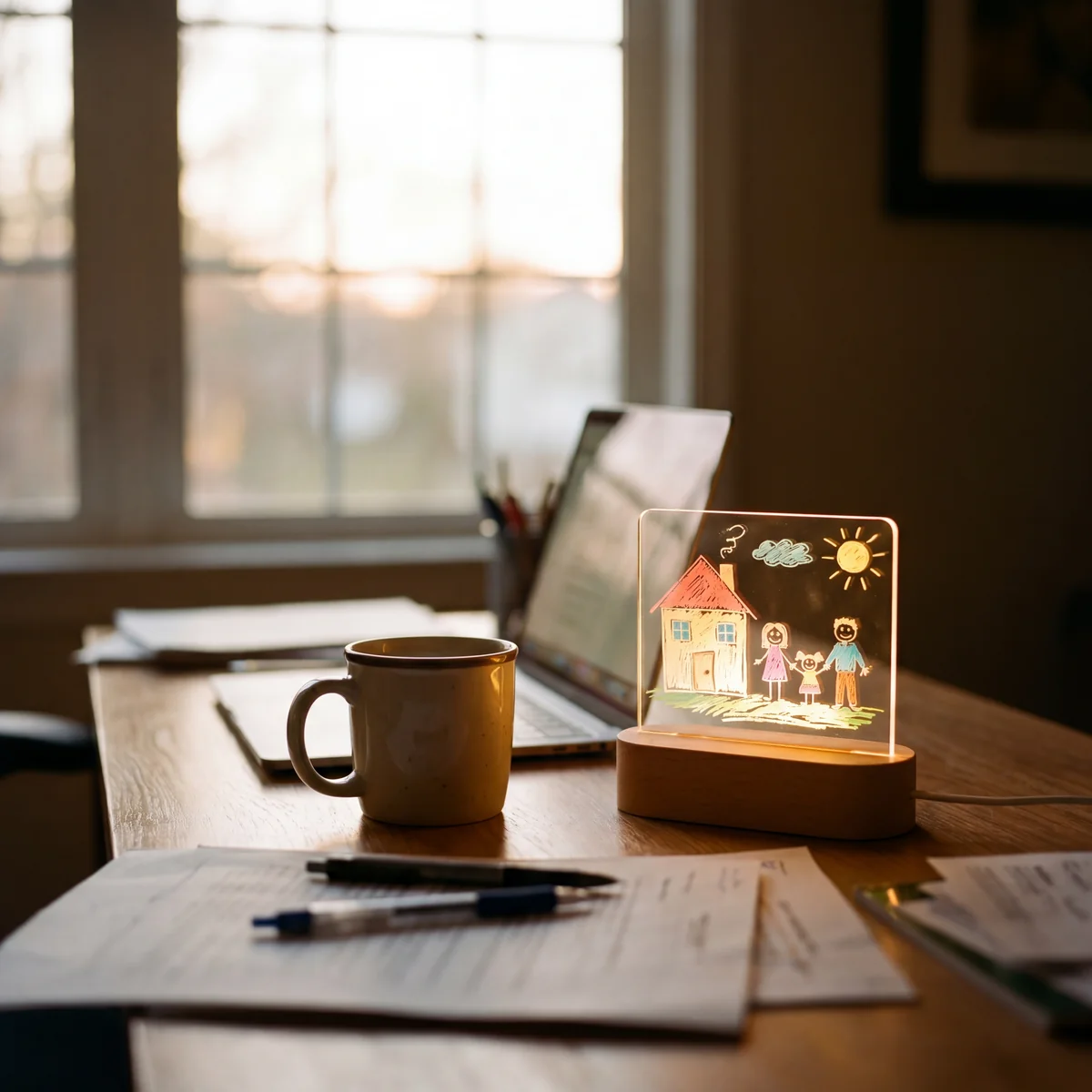
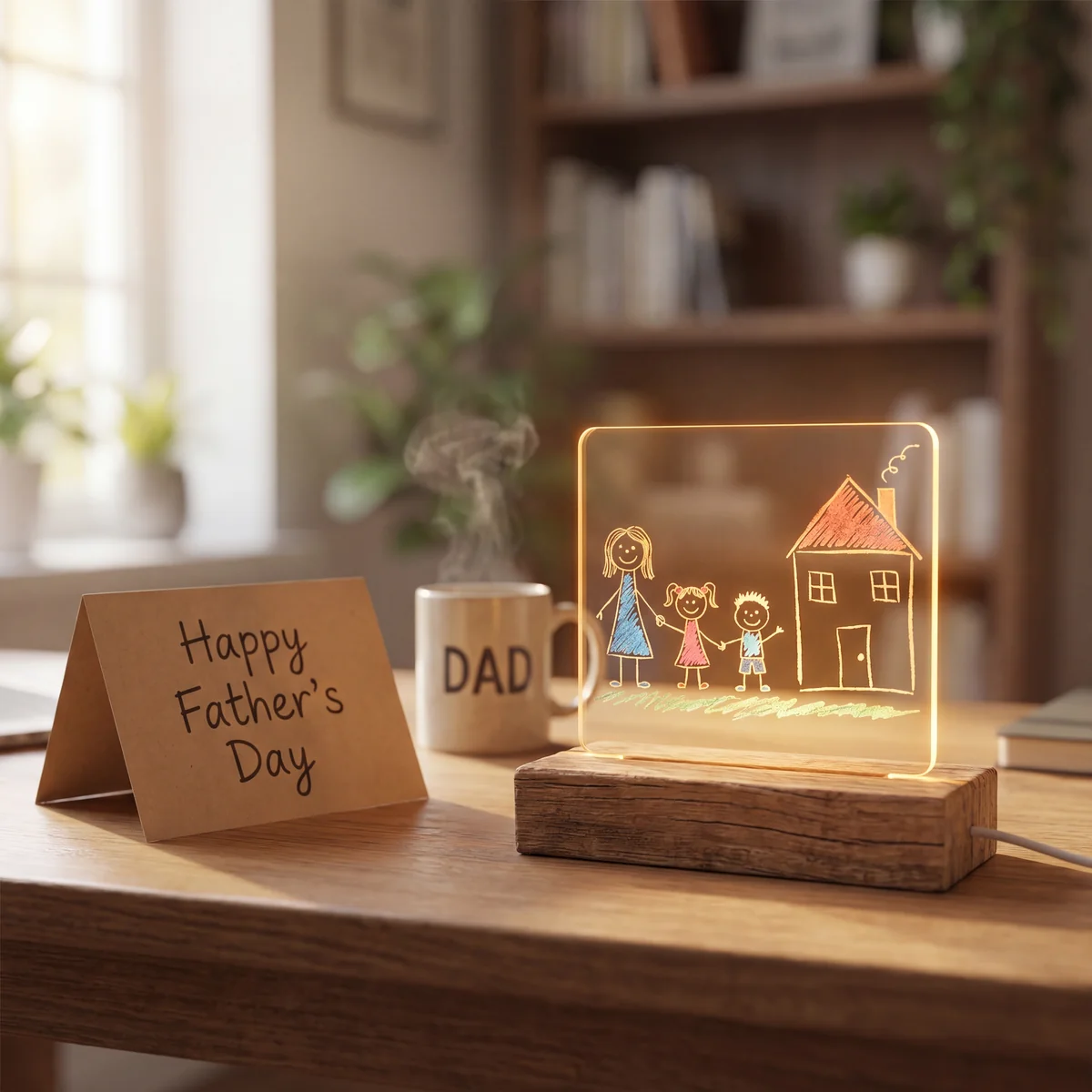
The product is straightforward. We take the image you upload and UV-print it directly onto a clear acrylic plaque. UV printing means the ink bonds to the surface rather than sitting on top of it, so the detail and color hold up over time. The plaque then sits in a slotted wooden base that contains a row of warm white LEDs.
The base connects via a USB cable, which means Dad can plug it into a laptop, a phone charger brick, or a basic USB wall adapter. No proprietary power supply, no batteries to replace. When it is off, the acrylic looks like a printed keepsake. When it is on, the light travels through the acrylic and illuminates the drawing from within, which gives the whole thing a warm, slightly magical quality without being over the top.
The wood base has a natural finish. The acrylic is cut to a standard display size. The whole unit sits flat and stable on any hard surface.
Getting the Most Out of Your Child's Animal Drawing
Animal drawings work well for this product because they tend to have a clear central subject and enough line work to read well when lit from behind. That said, a few things help.
Contrast matters more than color accuracy. A drawing done in dark marker or crayon on plain white paper is going to photograph and print more cleanly than one done in light pencil. If the drawing is faint, take the photo in good natural light and make sure the paper is flat against a solid surface.
Do not worry too much about lined paper. A lot of kids draw on whatever is in front of them, including notebook paper. We can work with that. Backgrounds with heavy color or pattern can sometimes compete visually with the animal subject, so if you have a choice between two versions of the drawing, go with the one where the animal is on a plain background.
And if the drawing has a title written by the kid, a date, or even just their name scrawled in the corner, leave it in. Those details are part of what makes the print worth looking at.